Main Body
7 Lesson 18: 좀 멀긴 하지만 하루에 갔다올 만해요.
좀 멀긴 하지만 하루에 갔다올 만해요.
학습 목표 Goals
By the end of this lesson, you will be able to:
- Exchange information about travel destinations
- Recommend must–visit places
- Share detailed information about timing, expenses, and other travel information
들어가기 Setting Up
Lesson Focus
- INGREDIENTS – 단어 Vocabulary
- Vacation
- RECIPE – 문법과 표현 Grammar
- A/V–기는 하지만, A–기는 한데, V–기는 하는데
- V–는 데 걸리다/들다
- V–(으)ㄹ 만하다
- LET’S COOK! – 해 봐요! Classroom Tasks
- Interpretive Task 1: Weekend activities
- Interpretive & Interpersonal Task 2: Sokcho camping website
- Interpersonal & Presentational Task 3: My preferred vacation
- KOREAN FLAVORS – 한국어와 한국 문화 Korean Language and Culture
- Verbs are everywhere! 1
- Temple stay
- I GOT THIS! – 할 수 있어요! Async. Practices and Tasks
- Integrated Performance Task Link
- WB Link
짝하고 얘기해 봐요! Share your thoughts!
 |
 |
 |
새 휴가 Vacation
 |
 |
 |
 |
 |
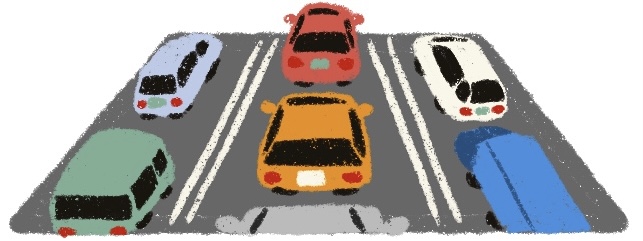
| 고속도로 | 고속버스 | 기념품 | 베개 | 볼거리 |
| highway | express bus | souvenir | pillow | attractions |
 |
 |
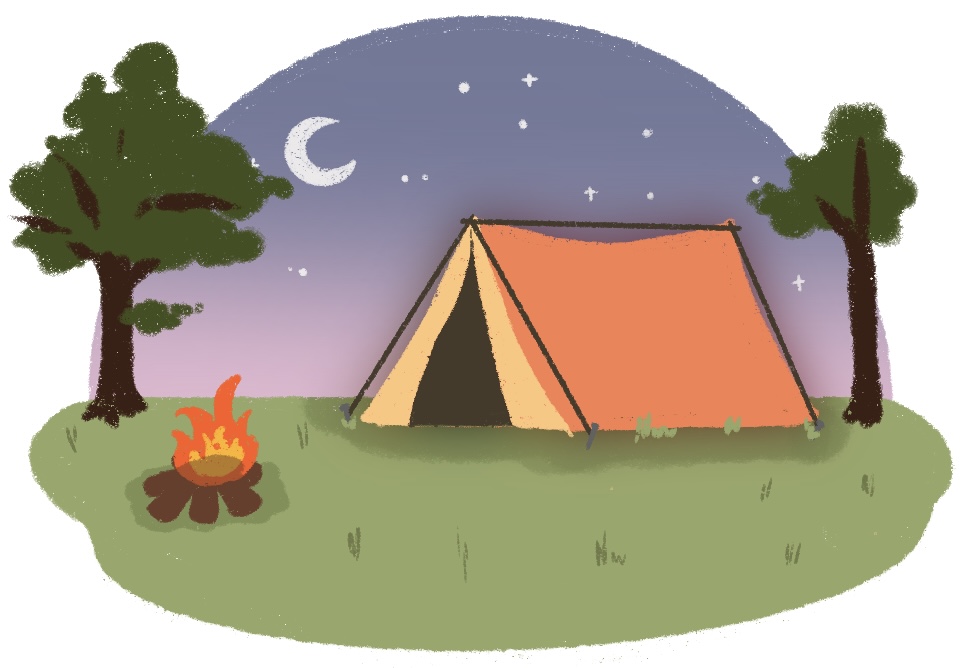 |
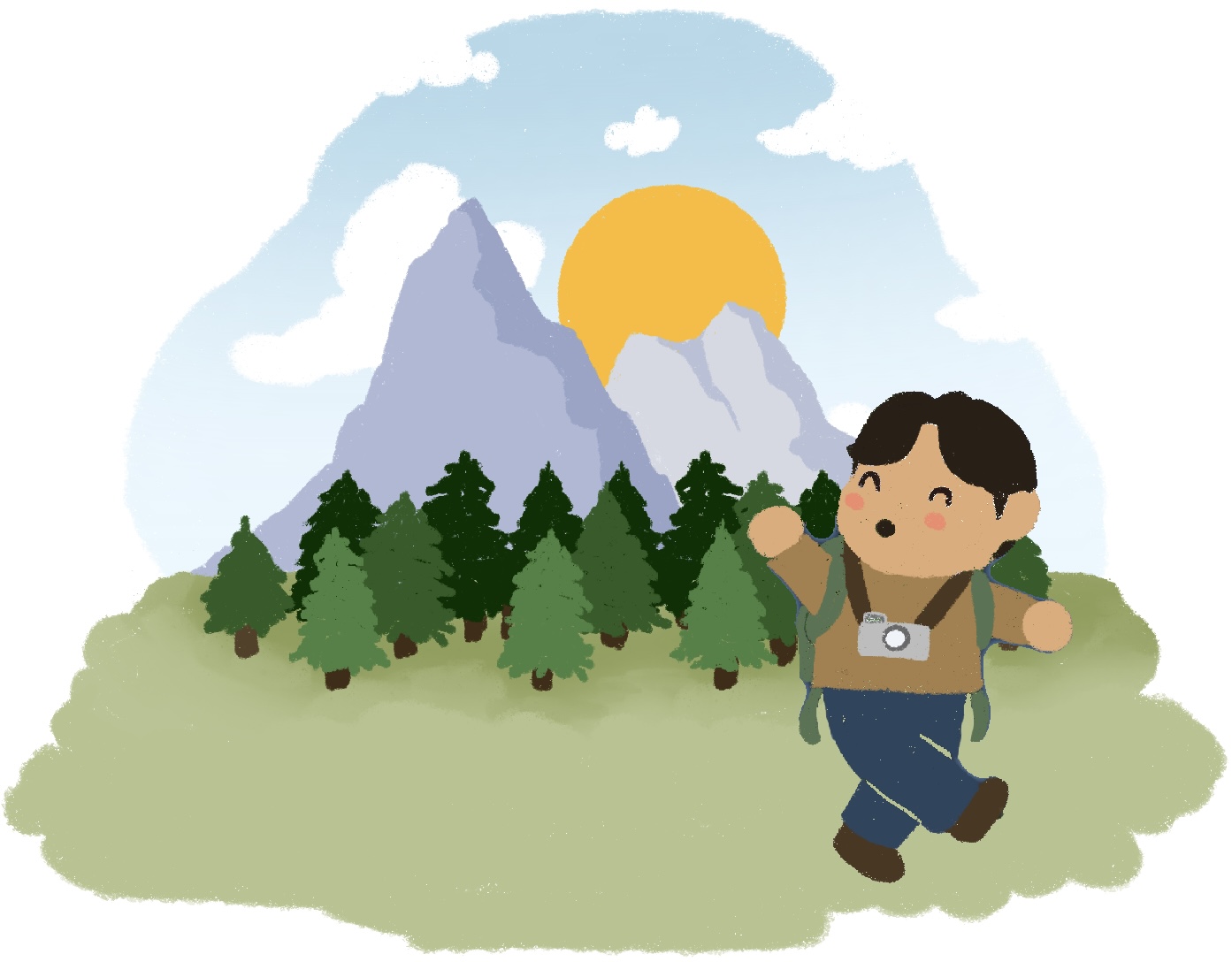 |
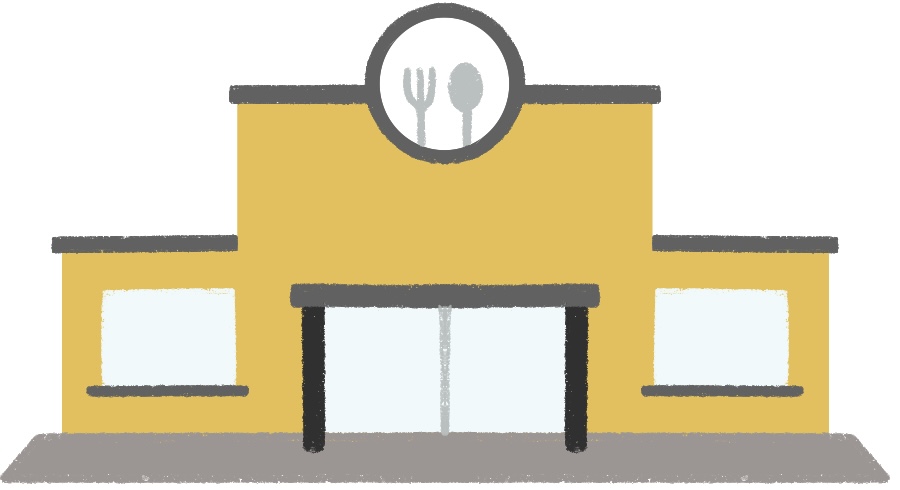 |
| 자연 | 침낭 | 캠핑장 | 휴가 | 휴게소 |
| nature | sleeping bag | campground | vacation | rest area |
새 단어와 표현 Other Vocabulary and Expressions
| 경비 | expense | 현대식 | modern (style) |
| 대, 소 | large, small (size) | 갔다오다, 다녀오다 | to make a visit, to go and come back |
| 매점 | corner store | 느끼다, 느껴지다 | to feel, to be felt |
| 사용료 | rental fee; usage fee | 들르다 | to stop by |
| 시설 | facilities |
떠나다
|
to leave (a place) |
| 일인용, 이인용 | single, double | 절약(하다), 아끼다 | to save, to conserve |
| 장비 | equipment | 준비(하다) | to prepare, to get ready |
| 전통 건물 | traditional building | 싱싱하다 | (fruits and vegetables) to be fresh |
| 해산물, 해물 | seafood | 충분하다 | to be enough |
| 일박이일 | one night, two days (trip) | 여행을 떠나다 | to go on a trip |
단어 메모지 Vocabulary Notes
1. Sino-Korean Suffixes: –물, –박, and –용
–물, –박, and –용 are frequently used Sino-root suffixes with meanings as shown here.
|
2. –거리
–거리 means ‘material’ or ‘ingredient,’ and it is often combined with a noun as in 국거리 (ingredients for making soup), 일거리 (work to do), and 구경거리(attractions). It is also used with the noun-modifying –(으)ㄹ form as shown below:
|
The following words are used frequently enough that they are written as one word and do not require a space between the modifier and 거리.
|
3. 갔다오다
갔다오다 captures the idea of going and coming back in a sequence. 다녀오다 means the same.
| 주말에 설악산에 갔다왔어요. | I visited Seoraksan Mountain last weekend. |
| 주말에 설악산에 다녀왔어요. | (Literally, I went to Seoraksan Mountain and came back.) |
If someone briefly comes and leaves, you can use 왔다가다:
| 친구가 잠깐 왔다갈 거예요. | My friend will stop by for a few minutes. (Literally, My friend will come and then leave.) |
단어 연습
연습 1.
연습 2.
| 대 | 매점 | 사용료 | 시설 | 이인용 |
강원 힐링 캠핑장 이용 안내
연습 3.
Ask and answer the following questions with a partner.
| 1. 자연이 아름다운 곳은 어디입니까? | |
| 2. 미국의 휴게소에서는 어떤 음식을 팝니까? | |
| 3. 캠핑 장비를 빌릴 수 있는 곳은 어디입니까?. | |
| 4. 한국의 유명한 기념품으로는 어떤 것이 있습니까? | |
| 5. 여행 경비를 절약하려면 어떻게 해야 합니까? | |
| 6. 최근에 어디로 여행을 다녀왔습니까? | |
| 7. 싱싱한 해산물은 어디에서 살 수 있습니까? | |
| 8. Your own question |
1. A/V–기는 하지만, A–기는 한데, V–기는 하는데 Expressing Reservation or Concern

1. –기는 하다 indeed
–기는 하다 is useful when you admit that the proposed information is indeed right.
| 캠핑 장비가 비싸긴 하네요. | The camping equipment is expensive (as you said)! |
| 연휴라서 고속도로가 좀 막히긴 합니다. | Since it is a long weekend, there sure is a lot of traffic on the highway. |
2. A/V–기는 하지만, A–기는 한데, V–기는 하는데 Expressing reservation
The ending –기는 하다 combined with –지만 and –(으)ㄴ/는데 softens your tone when you are adding your opinion or information that might be a counterpoint to what’s been stated.
| 가: 일박이일로 가기에 속초가 좀 멀지 않아요? | Isn’t Sokcho a little far for a one-night trip? |
| 나: 속초가 멀긴 하지만 부산보다 훨씬 가까워요. | Sokcho is far, but it is much closer than Busan. |
| 가: 연휴인데 고속도로가 막히겠다. | It is a long weekend, so the highway will be congested. |
| 나: 고속도로가 막히긴 하지만 터널이 있어서 금방 가. | It is true the highway will be congested, but we’ll get there in no time because there is a tunnel. |
| 3월이면 캠핑하기 춥지 않아요? | Isn’t March a little cold to camp? |
| 좀 춥긴 춥지만 캠핑장이 한적해서 좋아요. | It is cold, but it is good, since campsites are not crowded. |
| 기념품 가게 갔다왔어요? | Have you been to the souvenir store? |
| 네, 갔다오긴 했는데 한번 더 가야 돼요. | Yes, I did go, but I need to go one more time. |
3. Conjugation
Conjugate these verbs and adjectives on your own:
| Dictionary Form | –기는 하는데 | –기는 하지만 |
Dictionary Form
|
–기는 하는데 | –기는 하지만 |
| 달라지다 | 싱싱하다 | ||||
| 걷다 | 차갑다 | ||||
| 만들다 | 인기있다 |
<Answer key> 걷기는 하는데, 걷기는 하지만, 만들기는 하는데, 만들기는 하지만, 싱싱하긴 한데, 싱싱하기는 하지만, 차갑기는 한데, 차갑기는 하지만, 인기있기는 한데, 인기있기는 하지만
연습 1. –기는 하지만/하는데/한데
Combine the two pieces of information to mildly deviate from the first while acknowledging its validity. Use –기는 하지만 /하는데/한데.
| (맛보기) | Situation | However… |
| 음악 듣기를 좋아해요. | 기숙사에서는 헤드폰으로 들어요. | |
| ⇒ 음악 듣기를 좋아하기는 하지만/하는데 기숙사에서는 헤드폰으로 들어요. | ||
| 다음 주에 시험이 있어요. | 이번 주말에 친구들하고 속초에 갔다 오고 싶어요. | |
| ⇒ 다음 주에 시험이 있기는 하지만/한데 이번 주말 주말에 친구들하고 속초에 갔다 오고 싶어요. | ||
| Situation | However… | |
| 1. | 한국어 공부가 어려워요. | 재미있어요. |
| ⇒ | ||
| 2. | 오늘 하루 종일 비가 와요. | 많이 오지는 않아요. |
| ⇒ | ||
| 3. | 아직 날씨가 추워요. | 바다를 보면 좋을 거 같아요. |
| ⇒ | ||
| 4. | 숙소가 좀 비싸요. | 시설이 좋고 바다에서 가까워요. |
| ⇒ | ||
| 5. | 속초가 서울에서 꽤 멀어요. | 요즘 새 고속도로가 생겨서 하루에 다녀 올 수 있어요. |
| ⇒ | ||
| 6. | 음식 배달이 편리해요. | 버려야 하는 쓰레기가 너무 많이 생겨요. |
| ⇒ | ||
| 7. | 제주도에 볼거리와 먹을거리가 많아요. | 여행 경비가 꽤 많이 들어요. |
| ⇒ | ||
연습 2. –기는 하지만/하는데/한데
Add a slightly diverging fact to the prompt after acknowledging it. Use –기는 하지만/하는데/한데.
(맛보기) 가: 이번 주말에 영미 만나요?
(맛보기) 나: 만나기는 하지만/하는데 영미가 아르바이트를 해서 잠깐 얼굴만 볼 거예요.
1. 가: 이사 간 집 월세가 전 보다 많이 싸지요? 돈이 많이 절약되겠네요!
1. 나: _____________________________________________________
2. 가: 이번 한국어 시험 준비는 많이 했어요?
2. 나: _____________________________________________________
3. 가: 주말에 전주로 여행 떠날 거예요?
3. 나: _____________________________________________________
4. 가: 기숙사에 살면 밤에 시끄럽지 않았어요?
4. 나: _____________________________________________________
5. 가: 새로 이사 가는 원룸은 반려동물을 키워도 돼요?
5. 나: _____________________________________________________
6. 가: 방학 동안 일을 많이 해서 돈을 많이 모았겠네요?
6. 나: _____________________________________________________
7. 가: 한국에 가면 한국의 여러 도시에 갈 수 있겠네요?
7. 나: _____________________________________________________
8. 가: 이 오피스텔이 전에 살던 아파트보다 많이 작네요?
8. 나: _____________________________________________________
연습 3. –기는 하지만/하는데/한데
There are two sides to every situation: Work with a partner, and exchange your thoughts on the following topics. Take turns where one partner gives an opinion, and the other provides a different perspective after granting the first point.
(맛보기) 서울 렌트비
(맛보기) 가: 서울은 아파트 렌트비가 너무 비싸서 생활비가 많이 들지요?
(맛보기) 나: 서울 렌트비가 비싸긴 하지만 음식 값은 그렇게 비싸지 않은 것 같아요.
서울 렌트비가 많이 들기는 하는데 교통비는 많이 안 들어요.
서울 집 값이 비싸긴 하지만 항상 활기차고 흥미있는 도시 잖아요.
1. 대학교 교육
2. 쓰레기 재활용
3. 캠핑 여행
4. 템플 스테이
5. 전원 생활
6. Your own topic
2. V–는 데 (걸리다/들다, ETC.) It Takes [Amount of Time, Money] To Do

1. V–는 데 (걸리다/들다/들어가다) it takes [amount of time, money] to do
“–는 ˇ 데” consists of a present tense noun–modifying suffix –는 and 데 place:
| 슬플 때 잘 가는 데가 어디예요? | Where is the place you usually go to when you are sad? |
When used with verbs of necessity or provision, –데 takes on an abstract meaning in doing something, for doing something, to do something:
|
|
–얼마나 (오래) or time phrase + 걸려요 | how long something takes: |
| 졸업 후에 직장을 찾는 데 얼마나 (오래) 걸려요? | How long does it take to find a job after graduation? | |
| 이력서 쓰는 데 네 시간이나 걸렸어요. | It took me four (long) hours to write my résumé | |
|
|
–얼마나 (많이) or money/time + 들어요 | how much something costs/goes in: |
| 배를 타는 데 (돈이) 얼마나 들어요? | How much does it cost to ride a boat? | |
| 이사하는 데 돈이 생각보다 많이 들어요. | It costs more than expected to move. | |
|
|
–뭐가 or ingredients + 들어가요 | what ingredients go in: |
| 비빔밥 만드는 데 뭐가 들어가요? | What goes in (to make) 비빔밥? | |
| 창문 세척액을 만드는 데 비누랑 식초가 들어가. | It takes soap and vinegar to make window cleaner. | |
|
|
–필요한 게 뭐예요 what is needed: | what is needed: |
| 캠핑 가는 준비하는 데 필요한 게 뭐지? | What do we need to prepare for the camping trip? | |
| 과자 만드는 데 필요한 요리 기구는 다음과 같아. | Cooking utensils that are needed for making cookies are as follows… |
The background ending –는데 has no space between –는 and 데, and there is a more indirect connection between the phrases. The pause between the phrases is slightly longer:
| 그 친구 선물 사는데(…), 필요한 게 뭘까? | I’m buying him a present… I wonder what he needs? |
Compare!
| 그 친구가 주로 선물을 잘 사는 데가 어디지? | Where is the place he usually buys presents? |
2. Conjugation
Try on your own:
| Dictionary Form | –는 데 | Dictionary Form | –는 데 |
| 마시다 | 마시는 데 | 굽다 | |
| 듣다 | 자르다 | ||
| 만들다 | 세우다 |
<Answer key> 듣는 데, 만드는 데, 굽는 데, 자르는 데, 세우는 데
연습 1. –는 데
비수기: off-season
연습 2. –는 데
연습 3. –는 데
Exchange information with your partner about good ways to achieve each result. Use –는 데.
(맛보기) 한국어 실력 늘리기
(맛보기) 가: 한국어 실력을 늘리는 데 뭐가 좋을까요?
(맛보기) 나: 한국어 실력을 늘리는 데 한국어로 이야기하는 게 도움이 돼요.
1. 지방에 가기
2. 캠핑 장비 사기
3. 여행 경비 모으기
4. 좋은 직장에 취직하기
5. 아침에 일찍 일어나기
6. 자기에게 맞는 전공 찾기
7. Your own
연습 4. –는 데
Give detailed advice about the following topics (3 to 5 sentences each) as shown in the example. Use –는 데.
(맛보기) 성공적인 대학교 생활
(맛보기) 성공적인 대학교 생활하는 데에는 계획을 세우는 게 중요해요. 좋은 친구들도 사귀어야
(맛보기) 돼요. 좋은 친구들을 사귀는 데는 동아리 활동이 도움이 돼요. 그리고 새로운 것도 배우고
(맛보기) 여러가지 경험을 하는 게 좋아요. 새로운 것도 배우고 여러가지 경험을 하는 데는
(맛보기) 인턴십을 하는 게 좋아요.
1. 휴가 잘 보내기
2. 여행 경비 절약하기
3. 한국 생활 잘 하기
4. 환경 보호하기
3. V–(으)ㄹ 만하다 Worth Doing, Doable

1. V–(으)ㄹ 만하다 worth doing, doable
The ending –을 만하다 can be translated as something is worth doing, manageable or tolerable/admissible (commenting on others’ actions):
| worth doing: | |
| 전공 수업 중에 들을 만한 수업 있어요? | Are there any classes in your major worth taking? |
| 템플 스테이는 한번 해 볼 만합니다. | A temple stay is worth trying at least once. |
| doable, manageable, can be done: | |
| 주말에 고속 도로 운전할 만해요? | Is weekend driving doable (not too congested)? |
| 이십 분은 길게 느껴졌지만 기다릴 만했어요. | Twenty minutes felt like a long time, yet waiting was tolerable. |
| understandable: | |
| 그 사람 화 낼 만하네. | His getting mad is understandable. |
| 돈 많이 들이고 갈 만했군요. | It sounds reasonable that you spent a lot of money to go. |
2. Conjugation
Try on your own:
| Dictionary Form | –(으)ㄹ 만하다 | Dictionary Form | –(으)ㄹ 만하다 |
| 마시다 | 마실 만하다. | 굽다 | |
| 듣다 | 자르다 | ||
| 만들다 | 세우다 |
<Answer key> 들을 만하다, 만들 만하다, 구울 만하다, 자를 만하다, 세울 만하다
연습 1. –(으)ㄹ 만하다
연습 2. –(으)ㄹ 만하다
| 선물하다 | 쉬다 | 가다 | 보다 | 믿다 | 쓰다 | 물어 보다 | 살다 |
템플스테이: Temple Stay
연습 3. –(으)ㄹ 만하다
Ask your partner whether something is worth pursuing, using –(으)ㄹ 만하다. Your partner is expected to answer also using –(으)ㄹ 만하다 and to add some more thoughts using –기는/긴 하지만that dampen the excitement. Take turns asking and answering.
(맛보기) (속초 근처에 등산가다/산)
(맛보기) 가: 속초 근처에 등산 갈 만한 산이 있어요?
(맛보기) 나: 네, 설악산이 있어요. 좀 힘들긴 하지만 등산할 만할 거예요.
1. 구경하다/(partner’s) 고향
2. 한국에서 친구를 만나서 놀다/동네
3. 자랑하다/우리 학교
4. 한국에서 사다/기념품
5. 일박이일로 다녀오다/ 관광지
6. 추천하다/휴가 여행지
7. 요즘 듣다/ 음악
8. 음식 배달 시키다/ 주위 식당
연습 4. –(으)ㄹ 만하다
Introducing my hometown: Work in groups of 2 to 3 classmates. Introduce your hometown to your group members. Include information on places to visit, activities to engage in, restaurants to eat at, and any other things that can be useful for visitors. Make at least 5 sentences. Make your town sound inviting and attractive, sprinkling in lots of –(으)ㄹ 만하다.
(맛보기) 내 고향 전주
(맛보기) 제 고향은 한국 전주예요. 전주에는 구경할 만한 곳, 먹을 만한 음식, 경험해볼 만한
(맛보기) 것이 꽤 많아요. 전주에서 구경할 만한 곳은 전주 한옥마을과 오목대예요. 옛날 전통
(맛보기) 건물과 경치를 볼 수 있어서 꼭 가볼 만해요. 또 전주 남부시장에도 가볼 만해요. 전주
(맛보기) 지역 청년들이 만든 수공예품, 맛집들이 모여있는 곳이에요. 쇼핑할 만한 기념품도
(맛보기) 많고 먹을 만한 전통, 현대 음식도 많아요. 전주에서는 비빔밥, 콩나물국밥, 떡갈비,
(맛보기) 순대국밥은 꼭 먹어봐야 할 음식들이에요. 이번 주말에 저와 함께 전주에 가
(맛보기) 보실래요?
제 고향을 소개합니다.
___________________________________________________________________________
___________________________________________________________________________
___________________________________________________________________________
___________________________________________________________________________
4. 종합 연습 Role Play
Create a role play with your partner using the key grammar expressions and new vocabulary from this lesson. Include 5 to 6 meaningful rounds of dialogue. Take turns and feel free to add details to make the conversation lively.
- Context: You are a novice camper and planning to take a short trip for your vacation soon. Converse with your friend who is an expert camper to ask for advice regarding place, travel time, expenses, things to do, etc.
- Participants: A novice camper and their experienced friend
- Key Expressions: –기는 하지만/하는데/한데, –는 데 걸리다/들다, –(으)ㄹ 만하다
- Sample dialogue:
 |
 |
  |
Interpretive Task 1. 듣기
1. Will and Binh are planning a fun weekend activity together. Listen to the dialogue and take notes about their plans in Korean.
| 1. 뭐 하기로 했습니까? | |
| 2. 언제 하기로 했습니까? | |
| 3. 어디에서 하기로 했습니까? | |
| 4. 얼마 동안 하기로 했습니까? | |
| 5. 뭐를 가져가기로 했습니까? | |
| 6. 음식은 어떻게 하기로 했습니까? | |
| 7. 비용은 얼마나 듭니까? |
2. Now, talk with your classmates about what you learned from the dialogue. Then, listen to the dialogue again.
Interpretive Task 2. 읽기
Sokcho Camping Website
Will and Bihn are now reading the Sokcho Camping website. Read the information and answer the questions in English.
1. What facilities are available?
2. According to the website information, what would explain what glamping is?
3. How can Willow and Bin make reservation and pay?
4. Does the website explain the refund and cancellation policies? If so, what are they?
5. What other useful information do you see on the website? Please share with your friends.
| 속초 캠핑장
시설
캠핑장 이용료 (텐트/1박 기준)
매점
이용방법
연락처
|
Helpful Vocabulary
| 수돗물 | tap water | 주류 | liquor | 판매하다 | to sell | 공공 | public |
| 환불 | refund | 전액 | full amount | 이용 당일 | the day of use |
Interpersonal and Presentational Task 3. 토론하고 발표하기
My Preferred Vacations
1. 내가 선호하는 여행
What type of travel do you prefer, and why? What do you see as the advantages and disadvantages of that type of travel?
Discuss with 2-3 classmates: What kind of travel appeals most to each of you? Why so? Discuss the pros and cons of your choices.
Try to use the grammar you learned in the lesson, –기는 한/하는데; –을 만하다.
|
|
2. 가장 기억에 남는 여행지 추천
가장 기억에 남는 여행 경험에 대해 말하고, 다른 사람들에게 그 장소를 추천해 주세요. 그리고 그 이유와 자세한 정보도 함께 알려 주세요.
Language Point: Verbs are Everywhere! 1
The connectors –고, –어, –다가, or –어 다가 may come before 가다 or 오다 to create an interesting phrasal impact. Study these verb series carefully, and your life in Korean will see much improvement!
Verb–고 가다/오다
| 먹고 가다/오다 | 가지고 가다/오다 |
| 듣고 가다/오다 | listens and (then) goes/comes |
| 보고 가다/오다 | sees and (then) goes/comes |
| 자고 가다/오다 | sleeps and (then) goes/comes |
| 하고 가다/오다 | does and (then) goes/comes |
| 읽고 가다/오다 | reads and (then) goes/comes |
| 가지고 가다/오다 | holds and (then) goes/comes = takes/brings (something) (Also, 갖고 가다/오다) |
| 데리고 가다/오다 | accompanies and (then) goes/comes =takes/brings an equal, a younger person |
| 모시고 가다/오다 | (honorably) holds up and (then) goes/comes = takes/brings (an honorable person) |
In all but the last three phrases above, the first action happens and then the second action (of going or coming) happens. When you are saying something like “wear something to a party” or ‘bus to school” in English, what you are actually saying is you “put on something and then go to a party” or “get on a bus and then go to school.” This sort of two-action phrases need to be expressed with the –고 connector in Korean.
| 파티에 정장을 입고 가야 합니까? | Should one wear formal wear to the party? (Put it on and then go.) |
| 졸업식에 검은 옷을 입고 오십시오. | Wear a dark outfit to the graduation ceremony. (Put it on and then come.) |
| 학교에는 무엇을 타고 갑니까? | What do you ride to school? (Getting on what do you go to school?) |
| 버스를 타고 옵니다. | I bus to school. (I get on the bus and come to school.) |
Verb–아/어 가다/오다
Verb–아/어 가다/오다 means that someone has been engaging in the activity (expressed in the first verb) for some time. 오다 expresses an action continuing up to the point of reporting, whereas 가다 expresses an action heading toward an end state (sometimes the suffix “다” might be added).
| 먹어오다 | 그 집은 쌀이 떨어져서 보리죽을 먹어왔습니다. That family ran out of rice and has been eating barley porridge up to now. |
| 먹어가다 | 이제 보리죽도 다 먹어갑니다. Now they have almost eaten up the barley porridge. |
|
들어오다
|
워싱턴 대학 캠퍼스가 예쁘다는 이야기는 많이 들어왔습니다. I have been hearing many a time that the University of Washington campus is pretty. |
| 봐가다 | 이 일이 어떻게 되어 가는지 봐가면서 다음 계획을 세우겠습니다. As I watch and see how this turns out, I will make a plan for the next step. |
| 봐오다 | 이 일이 어떻게 되어 왔는지 계속 봐오셨는데도 저를 못 믿으세요? You have seen how this has been turning out, and yet you still can’t believe me? |
| 해가다 | 숙제 다 해가니?’ Are you nearing finishing (almost finished with) your homework? |
| 해오다 | 어려웠지만 열심히 해왔습니다. It has been difficult, but I have worked hard up to this moment. |
With some verbs involving duty and responsibility, –어 가다/오다 can mean come with something done/finished. (That is, having finished something, come/go):
| 선생님한테 꾸중 듣지 않게, 숙제를 다 해 갔다. | I did all my homework so I wouldn’t get scolded by the teacher. (Having done all my homework, I went.) |
| Workbook 10과 숙제 내일까지 다 해 오세요. | Finish workbook lesson 10 by tomorrow before you come. (Having finished, come to class.) |
| 교과서 122 페이지 읽어 오세요. | Come (to class) having read page 122 in the textbook. (Having read, come to class.) |
When the verb endings get longer, 가다/오다 tend to follow a space.
Phrasal verbs meaning take and bring can have either –고 or –어 as a connector, probably because you still have the item when you arrive somewhere!
가지고 가다/오다 = 가져 가다/오다 (= 갖고 가다/오다)
데리고 가다/오다 = 데려 가다/오다
모시고 가다/오다 = 모셔 가다/오다
한국 문화 길잡이
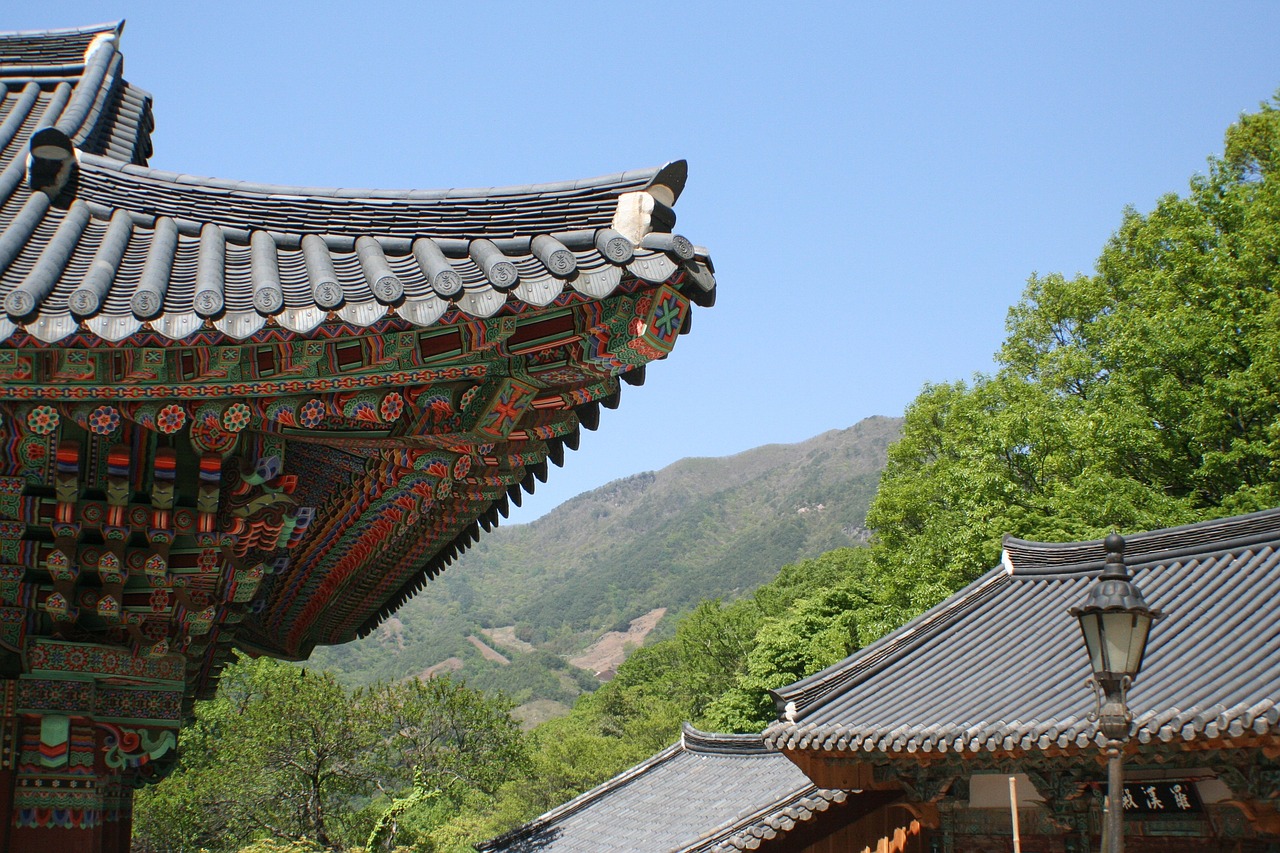
Image by gracesongyilee from Pixabay
Temple Stay
Since its introduction to Koguryo in the 4th century, Buddhism has become deeply ingrained in Korean culture and tradition. That is why you can find Buddhist temples nestled in many mountains throughout the Korean peninsula. Presently, approximately 16% of the South Korean population embraces Buddhism, making it the country’s second-largest religion, following Protestant Christianity at 17%.
As a part of efforts to make Buddhism more accessible and familiar to the public, Buddhist temples have recently started welcoming visitors and providing them with an opportunity to immerse themselves in the rich traditions of Korean Buddhism through temple stays where one can experience the daily routines and culinary culture of Buddhist monks. Another, more casual option is the chance to stay for a time within the temple’s tranquil setting, allowing guests to unwind and detach themselves from the hustle and bustle of their everyday lives. Unsurprisingly, this temple stay has gained significant popularity even among non-Buddhists and foreigners seeking solace and rejuvenation.
As of 2022, a total of 140 temples now offer their unique temple stay programs, extending the opportunity to explore the essence of Korean Buddhism firsthand. Visit the following website to find more about available temple stay locations by region: https://eng.templestay.com/
할 수 있어요! I Got This!
Check to see if you can do the following:
- Exchange information about travel destinations
- Recommend must–visit places
- Share detailed information about timing, expenses, and other travel information
| Listening Script
|
|
| 윌: | 주말에 우리 같이 여행 갈까? |
| 빈: | 주말에? 주말 동안 여행할 수 있어? 시간이 너무 짧지 않아? |
| 윌: | 이틀이면 충분해. 서울에서 가까운 데에 갈 말한 곳이 진짜 많거든. |
| 빈: | 그래? 어디? |
| 윌: | 속초, 어때? 가는 데 두 시간밖에 안 걸려. |
| 빈: | 속초, 정말 가 보고 싶었는데 .. 그래, 가자! |
| 윌: | 좋아! 너 한국에서 캠핑해 본 적 있어? |
| 빈: | 캠핑? 아니, 없어. |
| 윌: | 우리 속초에 가서 캠핑할래? 바닷가에서 캠핑 할 수 있거든. 그리고 캠핑장 사용료도 별로 안 비싸. 65,000원밖에 안 하거든. |
| 빈: | 캠핑 좋지! 근데 우린 캠핑 장비도 없는데? |
| 윌: | 장비 필요없어. 웹사이트에서 다 빌릴 수 있으니까 걱정 마. |
| 빈: | 그래? 장비 빌리는 데 얼마나 들어? |
| 윌: | 어, 잠깐. 여기 있다. 이인용 세트는 하루에 45,000원. 그리고 의자랑 테이블 다 포함돼 있어.이 정도면 빌릴 만하지? |
| 빈: | 그러네. 베개하고 침낭도 빌릴 수 있어? |
| 윌: | 응, 근데 베개하고 침낭은 내가 있으니까 가져갈게. |
| 빈: | 그래. 고마워! |
| 윌: | 1박 2일 캠핑이니까 우리 토요일에 가서 일요일에 돌아오는 게 어때? |
| 빈: | 그것도 좋긴 한데, 금요일에 떠나서서 토요일에 오는 게 더 좋지 않을까? |
| 윌: | 좋아! 금요일에 가면 덜 복잡할 수도 있겠다. |
| 빈: | 그럼 음식은 어떡해? 해서 먹어? |
| 윌: | 속초에 가니까 싱싱한 해산물 사 먹자. 맛집이 많을 거야. |
| 빈: | 좋아! 가다가 휴게소 맛집도 들르자! 진짜 기대된다. 그럼 지금 바로 예약할까? |
| 윌: | 그러자! |