Main Body
3 Lesson 14: 이사할 집 찾았나요?
이사할 집 찾았나요?
학습 목표 Goals
By the end of this lesson, you will be able to:
-
Talk about housing arrangements and options.
- Ask questions in a round–about way.
- Share information about any misunderstandings or incorrect assumptions.
들어가기 Setting Up
Lesson Focus
- INGREDIENTS – 단어 Vocabulary
-
Housing arrangement
-
- RECIPE – 문법과 표현 Grammar
- A–(으)가/ V–나(요)?
- A/V–(으)ㄹ 줄 알았다/몰랐다
- NOUN 만큼
- LET’S COOK! – 해 봐요! Classroom Tasks
- Interpretive Task 1. At the welcome reception
- Interpretive & Interpersonal Task 2. Room for rent
- Interpersonal & Presentational Task 3. Off-campus living services
- KOREAN FLAVORS – 한국어와 한국 문화 Korean Language and Culture
- Irregular conjugation: More about –은/는
- Living arrangements in Korea
- I GOT THIS! – 할 수 있어요! Async. Practices and Tasks
- Integrated Performance Task Link
- WB Link
짝하고 얘기해 봐요! Share your thoughts!
What makes a good place to live? What information would you look for when searching for a place to live? Now let’s read these dialogues. What are they talking about?
 |
 |
 |
새 집 구하기 Finding a New Place
 |
 |
 |
 |
 |
|
동네
|
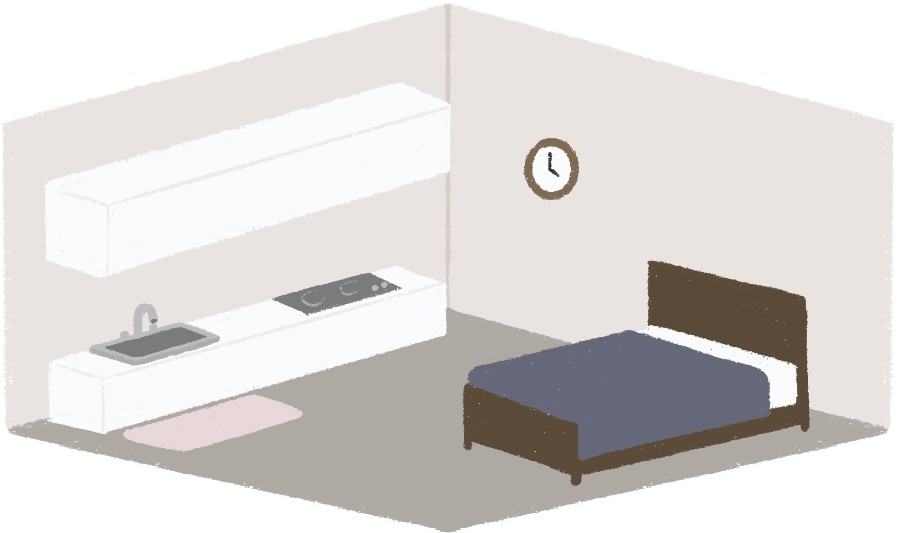
위치 | 방세, 집세/월세 | 보증금 | 원룸 |
| neighborhood | location | rent, monthly rent | security deposit | studio |
 |
 |
 |
 |
 |
| 계약하다 | 밝다 | 어둡다 | 안전하다 | 위험하다 |
| to sign a contract | to be bright | to be dark/dim | to be safe | to be dangerous |
새 단어와 표현 Other Vocabulary and Expressions
| 가격 | price | 지하 | basement |
| 가스요금 | gas bill/fee | 출퇴근 | commute |
| 경찰서 | police station | 층 | story, floor/layer |
| 버스 정류장 | bus stop | 피트니스 센터, 체육관 | fitness center, gym |
| 부엌 | kitchen | 고장 나다 | to be out of order/not working |
| 빨래방 | laundromat | 나오다 | to come out, to be charged |
| 생활비 | living expense | 들다 | to take (money, time, etc.) |
| 수도요금 | water bill/fee | 얻다 | to get, to gain |
| 요금 | fee, fare | 주차하다 | to park |
| 이웃(집) | neighbors (house) | 포함하다 | to include |
| 전기요금 | electricity bill/fee | N만큼 | as much as |
| 교통이 편리하다 | to be convenient for transportation | –에 포함이 되다 | to be included with |
단어 메모지 Vocabulary Notes
1. –을/를 포함하다, –에 포함되다 To include
포함하다/되다 has a broad sense of to include/be included, its antonym being 제외하다/되다 to exclude/be excluded:
| 방세에 전기요금, 수도세가 모두 포함되어 있습니다. | In the rent, electricity and water fees are all included. |
| 이번 패키지 여행에 홍콩은 제외되었지만 대만은 포함되었다. | Hong Kong is excluded from this tour package but Taiwan is included. |
2. 출퇴근 Commuting
출근(하다) literally means going (out) to work, and 퇴근(하다) means leaving work. With the combined word출퇴근하다, you can express commuting. It is only used for work and not for commuting to school:
| 이 동네는 출퇴근하기 편합니다. | It is easy to commute (to and from work) in this neighborhood. |
통학(하다) means commuting to school, but be careful –– 출학 doesn’t mean anything, and 퇴학(당하다) means getting kicked out of school!
3. 비 (expenses, costs) and 세 (tax, rent)
| 학비 | school/educational expenses | 교통비 | transportation cost |
| 생활비 | living expenses | 버스비/차비 | bus/car/taxi fare, fee |
| 병원비 | cost for hospitalization | 주차비 | parking cost, fee |
| 치료비 | expense for medical treatment | 수리비 | repair cost |
| 결혼 비용 | wedding expenses | 추가 비용 | additional costs |
| 집세 | rent for a house | 방세 | rent for a room |
| 월세 | monthly rental cost | 전세 | yearly or bi-annual rental cost |
단어 연습
연습 1.
연습 2.
Talk with a partner about what neighborhoods or areas, based on your life experience, can be described with each adjective.
- ___________이/가 안전하다
- ___________이/가 위험하다
- ___________이/가 깨끗하다
- ___________이/가 지저분하다
- ___________이/가 밝다
- ___________이/가 어둡다
- ___________이/가 조용하다
- ___________이/가 시끄럽다
- ___________이/가 위치가 좋다
- ___________이/가 월세가 싸다
연습 3.
Using the information in 연습 2, create a short introduction to your neighborhood.
| 우리 동네를 소개합니다!
|
연습 4.
Work with a partner. Each of you find a room, apartment, or house on the web that is for rent in a college town in Korea and go through this check list. Samle links are provided below. Take turns and ask questions to decide which would work best for you.
링크 1: https://ziptoss.com/map/%EC%8B%A0%EC%B4%8C?contract=monthly&propertyTypeNo=10
링크 2: https://www.woozoo.kr/houses?searchKeyword=%EC%8B%A0%EC%B4%8C%EC%97%AD
| 내가 찾은 집 | 짝이 찾은 집 | |
| 방세와 보증금이 얼마입니까? | ||
| 위치가 좋습니까? | ||
| 교통이 편합니까? | ||
| 버스 정류장이나 지하철 역에서 가깝습니까? | ||
| 주차할 수 있습니까? | ||
| 동네가 안전합니까? | ||
| 가스요금, 수도요금, 전기 요금이 포함되어 있습니까? | ||
| 동네에 경찰서, 공원, 빨래방이 있습니까? | ||
| Your own question |
1. A–(으)ㄴ가(요)/V–나(요)? I Wonder… Could You Tell Me…?

1. A–(으)ㄴ가/V–나 I wonder… could you tell me?
You learned in your first year that the ending –(으)ㄹ까expresses self–directed questions (“I wonder…”). As you recall, –(으)ㄹ까 carries a sense of future or strong uncertainty because of the future marker ㄹ:
| 그 사람 지금 어디에서 뭐 하고 있을까? | I wonder where that person is and what they could be doing now. |
You can express wondering with a simple sense of curiosity using the present–tense version:
| 그 사람 지금 뭘 하고 있나? | What’s he doing now, I wonder. |
This same self–wondering can tone down a question or ask a question in a round–about way. The politeness marker –요 makes the “wondering” a gentle question; without it, the wondering can be perceived as self-talk, just wondering, which obligates no listener to answer.
| 그 사람 지금 뭘 하고 있나(요)? | What’s that person doing now, I wonder? (Might you tell me?) |
Be aware of how –은가 /–나 gets fused with other endings:
| 그 사람은 언제 들르려나 (들르려고 그러나) | I wonder when he is trying to/going to stop by. (His appearance is long overdue.) |
2. Conjugation
To conjugate:
- Use –(으)ㄴ가 after adjectives and 이다
- Use –나 after verbs, 있다, and any past tense
Adjectives & 이다 + – (으)ㄴ가
| 옆집은 왜 이렇게 항상 시끄러운가? | Why are the neighbors always so noisy? |
| 주차비가 포함인가? | Is the parking included, I wonder? |
| 새 집은 버스 정류장에서 먼가요? | I wonder if the new house is far from the bus stop (can you tell me?) |
| 저 건물이 새로 생긴 찜질방인가요? | Is that building a new spa–bathhouse (do you know)? |
Verbs, 있다 & past tense + –나
| 그 사람은 아직도 집에 있나? | Is he still at home, (perhaps)? |
| 전기요금이 또 올라가나? | Electricity bills are on the rise again, I wonder? |
| 방은 어땠나요? | How was the room? |
| Verb Root | Dictionary Form | Conjugation Rule | Final Form | Examples |
| Adjective | 안전하다 밝다 가깝다 |
Add –(으)ㄴ가(요) |
안전한가요 밝은가요 가까운가요 |
동네가 안전한가요? Is the neighborhood safe? |
| Verb | 구하다 걷다 돕다 |
Add –나(요) | 구하나요 걷나요 돕나요 |
집에서 버스 정류장까지 얼마나 걸리나요? How long does it take from home to the bus stop? |
| ㄹ–ending root | 살다 멀다 |
Delete ㄹ–나/(으)ㄴ가(요) | 사나요 먼가요 |
동생은 지금 어디에 사나요? 집이 여기에서 먼가요? Where does your younger sibling live now? Is their home far from here? |
| Past tense | 구하다 밝다 |
–았/었 +나(요) | 구했나요 밝았나요 |
새 아파트를 언제 구했나요? When did you find a new apartment? |
Try on your own:
| Dictionary Form | –(으)ㄴ가/나(요) | –(으)ㄴ가/나(요) | Dictionary Form | –(으)ㄴ가/나(요) | –았/었나(요) |
| 찾다 | 어둡다 | ||||
| 듣다 | 길다 | ||||
| 만들다 | 크다 | ||||
| 계약하다 | 이웃이다 |
<Answer key> 찾나요, 찾았나요, 듣나요, 들었나요, 만드나요, 만들었나요, 계약하나요, 계약했나요, 어두운가요, 어두웠나요, 긴가요, 길었나요, 큰가요, 컸나요, 이웃인가요, 이웃이었나요?
연습 1. –(으)ㄴ가/나(요)?
연습 2. –(으)ㄴ가/나(요)
Work with a partner. Find out about each other by asking softened, polite questions. Use the –(으)ㄴ가/나요 ending.
(맛보기) 어디로 이사가요?
(맛보기) ⇒ 가: 어디로 이사가나요?
(맛보기) ⇒ 나: 네, 학교 앞에 새로 생긴 아파트로 이사가요.
1. ______ 씨가 사는 아파트는 보증금이 얼마예요?
2. _______ 씨의 방은 깨끗해요?
3. 우리 학교 기숙사는 시끄러워요?
4. 지금 사는 동네에 어떤 식당이 맛있어요?
5. 졸업 후에 어디로 이사하고 싶어요?
6. 아파트 광고는 어디에서 찾을 수 있어요?
7. 나에 대해서 뭐가 궁금해요?
8. Your own questions!
연습 3. –(으)ㄴ가/나(요)
궁금해요! Have a short conversation with a partner taking turns asking soft –(으)ㄴ가/나요 questions.
(맛보기) 가: 어제 새로 나온 좀비 영화를 봤어요.
(맛보기) 나: 그 영화 재미있나요?/ 영화가 많이 무서운가요? / 어느 극장에서 봤나요?/
(맛보기) 나: 그 영화 언제 나왔나요?
1. 요즘 학교 앞 아파트 월세가 꽤 비싸졌어요.
1. ⇒ ________________________________________________________?
2. 우리 아파트 앞에는 외국 음식을 파는 식당이 많아요.
2. ⇒ ________________________________________________________?
3. 새로 이사간 아파트가 학교에서 좀 멀어요.
3. ⇒ ________________________________________________________?
4. 요즘은 생활비가 많이 들어요.
4. ⇒ ________________________________________________________?
5. 집에 빨리 들어가야 돼요.
5. ⇒ ________________________________________________________?
6) 오늘 마음에 드는 원룸을 계약했어요.
6. ⇒ ________________________________________________________?
7. 학교 기숙사가 살기 편리해요.
7. ⇒ ________________________________________________________?
8. 이번에 이사 간 아파트는 집세는 싸요.
8. ⇒ ________________________________________________________?
연습 4. –(으)ㄴ가/나(요)
가르쳐 줄래요? Find out about the following topics by asking less direct questions with –(으)ㄴ가/나요. Ask at least four questions for each topic.
(맛보기) 살기 좋은 동네를 찾고 있다
(맛보기) ⇒ 가: 어디로 이사가나요?
(맛보기) ⇒ 나: 학교 옆이 살기 좋아요.
(맛보기) ⇒ 가: 그 동네에 공원하고 편의점도 있나요? 그 동네 방세는 얼마나 하나요? Etc.
1. 3학년 한국어 수업을 듣고 싶다.
2. 기숙사 생활에 대해 알고 싶다.
3. 다음 학기에 기숙사에 안 살고 아파트로 이사하고 싶다.
4. 내년에 _________로 여행 가고 싶다.
5. 컴퓨터를 새로 사려고 한다.
6. ___________(요리)를 만들려고 한다.
7. Your own topic
2. A/V–(으)ㄹ 줄 알았다/몰랐다 I Assumed That…; I Didn’t Expected That…

1. Review: V–(으)줄 알다/모르다 know how to
You learned –(으)ㄹ 줄 알다 know how to in Chapter 9:
| 가: 한국어로 이력서 쓸 줄 아세요? | Do you know how to write a résumé in Korean? |
| 나: 네, (한국어로 이력서) 쓸 줄 압니다. | Yes, I know how to write a résumé in Korean. |
| 가: 한자 읽을 수 있어? | Can you read Korean Chinese characters? |
| 나: 아니, 난 한자 읽을 줄 몰라. | No, I don’t know how to read Korean Chinese characters. |
2. A/V–(으)ㄹ 줄 알았다/몰랐다 I assumed that; I didn’t expect that
Sentences endings in –(으)ㄹ 줄 알았다/몰랐다 imply that I or you were mistaken in our assumptions or presumptions.
–(으)ㄹ 줄 알았다
This ending indicates that I didn’t know it would be the case... (In this interpretation, The syllable immediately preceding 줄 receives a high tone, the pitch quickly trailing off starting from 줄 and onward.)
| 난 방세가 비쌀 줄 알았어. | I anticipated the rent to be high (and it is not). |
| 매트가 학교 근처에서 방을 구할 줄 알았어. | I expected Matt to get a room near the school (and he didn’t). |
–(으)ㄹ 줄 몰랐다
–(으)ㄹ 줄 몰랐다 is often used with 이렇게, 저렇게, and 그렇게 and the exaggerative suffix –(이)나; it has only one interpretation: I didn’t know it would be so...
| 월세가 300만원이나 될 줄 몰랐어. | I didn’t know the monthly rent would be a whopping) 3,000,000 won. |
| 공동 세탁실이 이렇게 어두울 줄 몰랐어. | I didn’t realize the shared laundry room would be this dark. |
| 좋은 집 구하는 게 이렇게 힘들 줄 몰랐어요! | I would’ve never imagined finding a good place would be such a challenge. |
-(으)ㄴ 줄 몰랐다 offers a sense of closure, where my realization is met by a fact:
| 공동 세탁실이 이렇게 어두울 줄 몰랐어. | I didn’t realize the shared laundry room would be so dark. |
| 공동 세탁실이 이렇게 어두운 줄 몰랐어. | I didn’t realize the shared laundry room is/was so dark. |
Can you FEEL the difference between these two sentences? Yes? You must already have a native speaker’s intuition!
–(으)ㄹ 줄 알았다 (idiomatic)
The second interpretation of this ending is I knew it would be the case, which is usually said in an on-your-high-horse way. (In this interpretation, 줄 receives a high tone, and the pitch drops on 알 with a sing-songy ending in 았어.)
| 난 방세가 비쌀 줄 알았어. | I knew the rent would be high. (I could have told you that.) |
| 매트가 이 근처에 방을 구할 줄 알았어. | I knew that Matt would get a room in the vicinity. (I can read him.) |
3. Conjugation
–(으)ㄹ 줄 알았다/몰랐다 follows the pattern of –(으) type conjugation.
| Dictionary Form | Conjugation | Final Form | Examples |
| 얻다 | –(으)ㄹ줄 알다 | 얻을 줄 알다 | 원룸 아파트를 얻을 줄 알았어요. I was thinking you/they would get a studio apartment. (I stand corrected.) {Another interpretation with a different intonation that we are not practicing in this chapter: I knew you/they would get a studio.} |
| 밝다 | 밝을 줄 알다 | 밤에도 동네가 안전할 줄 알았어요. I would’ve thought the neighborhood would be safe at night. {Another interpretation with a different intonation that we are not practicing in this chapter: I knew the neighborhood would be safe at night.} |
|
| 들다 | 들 줄 몰랐다 | 혼자 사는 게 돈이 이렇게 많이 들 줄 몰랐어요. I had no idea that living alone would take this much money. |
Try on your own:
| Dictionary Form | –(으)ㄹ 줄 알았다 | Dictionary Form | – (으)ㄹ줄 몰랐다 |
| 얻다 | 듣다 | ||
| 나오다 | 포함하다 | ||
| 빠르다 | 멀다 | ||
| 어둡다 | 그렇다 |
연습 1. –(으)ㄹ 줄 알았다/몰랐다
연습 2. –(으)ㄹ 줄 알았다/몰랐다
연습 3. –(으)ㄹ 줄 알았다/몰랐다
Complete the conversation using –(으)ㄴ/는/(으)ㄹ 줄 알았어요.
(맛보기) 가: 저는 매운 음식을 잘 못 먹어요.
(맛보기) 나: 그래요? 저는 매운 음식을 잘 먹을 줄 알았어요.
1. 가: 다음 주말에 학교 앞 아파트로 이사하지요? 제가 도와 드릴게요.
1. 나: 지난 주말에 벌써 이사했어요.
1. 가: 지난 주말에요? ___________________________________.
2. 가: 니콜라스가 다음 학기부터 한 학기 동안 한국에 유학 가요.
2. 나: 한국이요? ___________________________________.
3. 가: 어휴, 우리 아파트가 위치는 정말 좋은데 너무 시끄러워!
3. 나: 그래? ___________________________________.
4. 가: 아이고, 아파트에 혼자 사니까 생활비가 정말 많이 들어.
4. 전기요금, 가스요금, 수도요금, 인터넷 요금까지…
4. 나: 그래? 난 집세에 ___________________________________.
5. 가: 밤 늦게 다운타운에 혼자 가지 마세요. 혼자 다니면 위험해요.
5. 나: 그래요? ___________________________________.
6. 가: 카이가 새로 이사하고 반려 동물을 키우고 있어요.
6. 나: 그래요? 카이는 알러지가 있어서 ___________________________________.
7. 가: 운동하러 오셨어요?
7. 나: 아니요, 빨래하려고요. 아파트 지하에 체육관이 ___________________________________.
연습 4. –(으)ㄹ 줄 알았다/몰랐다
정말 몰랐어요! Create a dialogue providing the plausible erroneous thinking that led to the problem, as shown in the example.
(맛보기) 강의실에 가야 하는데 기숙사에서 걸어서 20분 걸립니다.
(맛보기)⇒ 강의실이 너무 멀지 않아?
1. 방이 좀 어두워 보이네요.
2. 출퇴근 시간이 오래 걸리네요.
3. 동네에 슈퍼가 없군요.
4. 아파트가 10층에 있어서 좋겠네요. 바다도 보이고요.
5. 비가 오는데 안 가지고 왔어요?
6. 도자기 만들기가 어렵지요?
7. 서울이 좀 복잡하지요?
8. 서울에 사는 게 돈이 많이 들지요?
연습 5. –(으)ㄹ 줄 알았다/몰랐다
이럴 줄 몰랐네! What did you not know about the following? Share your thoughts with your partner.
(맛보기) 대학 생활
(맛보기) ⇒ 대학교 생활은 매일 즐거울 줄 알았어.
(맛보기) ⇒ 대학 생활이 이렇게 바쁠 줄 몰랐어.
1. 한국어 수업
2. 대학에서 친구 사귀기
3. 기숙사 생활
4. 인턴십 찾기 / 취직
5. 학교 동네에서 아파트 구하기
6. 가족을 떠나 혼자 살기
7. 아파트 구하기
8. Your own
3. Noun 만큼 As Much As

1. 만큼 as much as
When –만큼 comes after a noun, it carries the meaning “as much as the NOUN” with a sense of exaggeration about how much (or little).
| 부엌이 거실만큼 커. | The kitchen is as big as the living room. |
| 물을 겨우 그만큼 넣었어? 그럼 밥이 탈텐데… | Did you put just that much water? The rice will probably burn… |
–만큼 is also used with Adjectives and an 없다 phrase to convey the meaning of “it is the most Adjective; (there is nothing more Adjective).”
| 이 동네만큼 안전한 곳이 없습니다 | There is no place safer than this neighborhood. |
| (This neighborhood is the safest neighborhood.) |
연습 1. –만큼
연습 2. –만큼
Practice exaggerating using –만큼. There is nothing like it!
(맛보기) 삼겹살이 제일 맛있어요. [고기]
(맛보기)⇒ 삼겹살만큼 맛있는 고기는 없어요.
| 1. 제주도가 제일 아름다워요. | [곳] |
| 2. 떡볶이가 가장 맛있어요. | [한국 음식] |
| 3. 남산이 경치가 제일 좋아요. | [장소] |
| 4. 강남이 집세가 제일 비싸요. | [동네] |
| 5. 지하철이 제일 빠르고 편리해요. | [교통 수단 ] |
| 6. 도서관 3층이 제일 조용해요. | [데] |
| 7. 부모님이 저를 가장 사랑하세요. | [사람] |
| 8. 인터넷이 옷이 싸요. | [데] |
연습 3. –만큼
Answer the question using –만큼 and stress how good/fun/terrible/etc. things are or were.
(맛보기) 가: 이번 학기에 화학 수업 듣지요? 어렵지 않아요?
(맛보기) 나: 대학 다니는 동안 이 화학 수업만큼 어려운 수업이 없었어요!
1. 가: 어느 수업이 제일 재미있나요?
1. 나: ________________________________________________________
2. 가: 한국에서 여행한 곳 중에서 어디가 가장 좋았나요?
2. 나: ________________________________________________________
3. 가: 이 선생님 한국어를 정말 잘 가르치나요?
3. 나: ________________________________________________________
4. 가: 그 K-pop 가수가 그렇게 유명한가요?
4. 나: ________________________________________________________
5. 가: 한국 요리를 잘 하나요?
5. 나: ________________________________________________________
6. 가: 새로 이사간 오피스텔이 좀 작지요?
6. 나: ________________________________________________________
7. 가: 원룸에 사는 게 기숙사에 사는 것보다 생활비가 덜 들지요?
7. 나: ________________________________________________________
연습 4. –만큼
내 거만큼은 아닐 걸 (I doubt it’s as (much) as mine!) You believe everything you have (or know about) is better than your friend’s. In this activity with a partner, take turns boasting about each of the items listed. In response to Partner A’s first statement, Partner B will counter by claiming that A’s isn’t as good/large/funny/capable, etc., as theirs. Use verbs for some qualities and adjectives for others to describe what you are boasting about.
(맛보기) 가방
(맛보기) 가: 이번 학기에 수업이 많아서 가방이 아주 무거워.
(맛보기) 나: 내 가방만큼 무겁지는 않을 거야.
1. 동네
2. 학교
3. 우리 아파트 위치
4. 방세/집세
5. 식당
6. 대중교통
7. 가수/배우
8. Your own
4. 종합 연습 Role Play
Create a role play with your partner using the key grammar expressions and new vocabulary from this lesson. Include 5 to 6 meaningful rounds of dialogue. Take turns and feel free to add details to make the conversation lively.
- Context: Two people are having a conversation about finding a new room/apartment/house for rent. Ask and answer questions about the neighborhood and share what has been different from expectations. Take turns asking questions to decide which room/apartment would work better for you.
- Participants: A person who is looking for a new place and a person who recently moved to a new place.
- Key Expressions: –나요, –(으)ㄴ가요, –(으)ㄹ 줄 알았다/몰랐다, –만큼
- Sample dialogue:
 |
 |
 |
 |
해 봐요! Let’s Cook!
Interpretive Task 1. 듣기
At the Welcome Reception
Noah and Dami are at the welcoming reception hosted by the Office of International Students. Listen to the dialogue and take notes in Korean.
Austin’s wish list/questions
|
Information provided by the real estate agent
|
Now, talk with your classmates to share the information each of you wrote down. Then, listen to the dialogue again and finalize the list.
편의시설: community facilities or amenities such as gym, park, library, etc.
Interpretive Task 2. 읽고 쓰기
Room for Rent
1. You and your friend are looking for a room near campus and you found this advertisement from the local housing platform.
|
월세 방 있습니다. 소망 아파트 5층 방 두 개짜리 아파트에 큰 방 쓰실 분을 찾습니다. 최대 2인 가능합니다. 아파트 앞에 편의점이 있고 공원, 식당도 가깝습니다. 한세 대학교 후문에서 도보로 5분 거리이고 지하철 3호선 역도 걸어서 10분 거리에 있습니다. 방에는 옷장과 책상, 책장이 있고, 거실에 있는 소파와 텔레비전, 화장실, 부엌, 세탁기 등 함께 사용하실 수 있습니다. 수도요금, 전기요금, 가스요금, 인터넷 요금은 저하고 반씩 내시면 됩니다. 보증금 300만원에 월세 55만원입니다. 에어콘은 없지만 아파트 뒤에 산이 있어서 아침과 저녁에는 선풍기만 있어도 괜찮습니다. 관심 있으시면 연락주세요. 카톡 아이디는 hanse829입니다. 핸드폰 010–1234–5678으로 전화 주셔도 좋습니다. |
Helpful Vocabulary
| 후문 | back gate | 비다 | empty | 가능 | to be possible |
| 도보로 | on foot | 최대 |
maximum
|
||
| 거리 | distance | 선풍기 | fan |
2. [Role Play] Three people in a group. Two friends are potential tenants. One person is a current tenant living in the apartment and is looking for someone they can share the apartment with.
- Read the advertisement and write down the main information in Korean.
- Talk with your friend who will share the room with you about the information in this advertisement.
- List questions you and your friend have and discuss them before contacting the current tenant.
- Contact the current tenant to ask and answer questions and have further conversations to reach the next step.
- Make your decision and share the reasons.
Presentational Task 3. 발표하기
Off–Campus Living Services
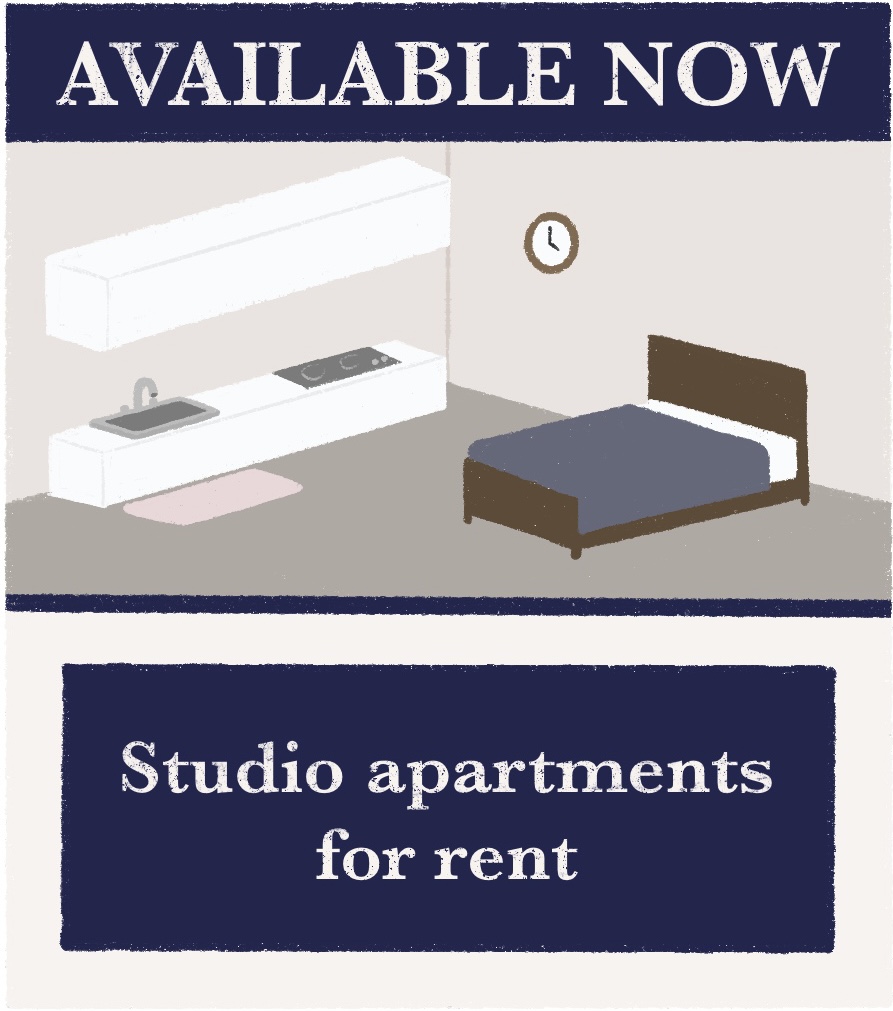
You are one of the undergraduate interns at your school’s office of off–campus living services. Your supervisor has assigned a task to your group to help incoming ESL students from Korea find a place to stay this summer. Read the message from one of those students and communicate with her in Korean.
Provide housing guidelines with two options, comparing features, rent, location, and addressing any questions about the listings.
Here is the message she wrote:
|
안녕하세요? Hi~ 저는 한강 고등학교 2학년 학생, 유지나라고 합니다. 이번 여름 방학 동안 000 대학교 ESL 프로그램에 영어를 배우러 가려고 등록했습니다. 이제 여름에 살 곳을 찾아야 되는데요, 제가 미국에 가 본 적이 한 번도 없고, 영어도 잘 못 해서요. 제가 인터넷으로 좀 찾아 봤는데 방 찾는 게 이만큼 어려울줄 정말 몰랐습니다. 그래서 그 대학에 한국어를 하는 학생분들이 저를 도와 주실 수 있나요? 부탁드립니다. 도와 주실 수 있는 분들은 이메일이나 전화로 연락 주세요. Email) yoojina@kmail.com Tel) 82–10–3452–9876 감사합니다! 유지나 드림 |
Language Point: –은/는
은/는 for contrast
Because of its role in marking old information and Topic, 은/는 has another power: to express contrast, presumably because one can only contrast items and matters that one is already familiar with.
| 나는 가고 쟤는 안 가. | I am going, and he is not (going). |
| 너는 어디 가? | (I am going home.) Where are you going? |
| 배는 고프지만 목은 아직 안 말라. | I am hungry; but I am not thirsty yet. |
| 가: 이건 별로 안 예쁜데. 저건 어때? 나: 칼은 선물로 안 좋고… 신발은 어때요? |
가: This is not so pretty. How about that one? 나: A knife will not make a good present. How about shoes? |
| 오늘은 비가 오겠어. | Today, it’s gonna rain, I’d bet (cf. it didn’t rain yesterday). |
Consider this:
| 질문: 지금 현금 있어요? | Do you have cash now? |
| 대답: 현금은 없지만 크레딧 카드는 있어요. | Cash, I don’t have; a credit card, I do have. |
| VS. 대답: 현금은 없지만 크레딧 카드가 있어요. | I don’t have cash, but (by the way), I do have a credit card. |
In the second answer, you are not contrasting credit card and cash. Cash is the topic, and credit card is the new information. You are offering up the information that by the way, you have a credit card.
은/는 for change of topic
은/는 is used to mark a new Topic, when changing from one Topic to another. There is not a great difference between contrasting and changing topics, after all.
| 근데, 승호는 왜 안 와? | Hey, how come 승호is not here yet? |
| 그건 그렇고, 밥은 언제 먹을 거야? | OK, that’s that, but anyway, when are we eating? |
It counts as changing topics when you introduce a new topic, such as “How about…?” or “What about…?” even if there is no preceding conversation. For example, it’s 6:00PM, and you walk into a room to find your child eating ice cream. You say, “저녁은?” (What about dinner? Did you eat dinner? You are going to spoil your dinner. Why are you eating ice cream at dinner time?)
은/는 for natural laws & axioms
Naturally following from known topics above is the usage of 은/는in statements of the laws of nature or received wisdom about inherent characteristics or generic descriptions:
| 지구는 둥글다. | The earth is round. |
| 필요는 발명의 어머니 | Necessity is the mother of invention. |
| 노력은 성공의 어머니 | Effort is the mother of success. |
| 사랑은 오래 참아요. | Love endures. |
| 이십 오 점 삼 더하기 삼십 오 점 오는 육십 점 팔이다. | 25.3 + 35.5 = 60.8 |
Again, the subject noun is taken as shared, old information and is the Topic. Even the sentence as a whole is not new information.
한국 문화 길잡이
Living Arrangements in Korea
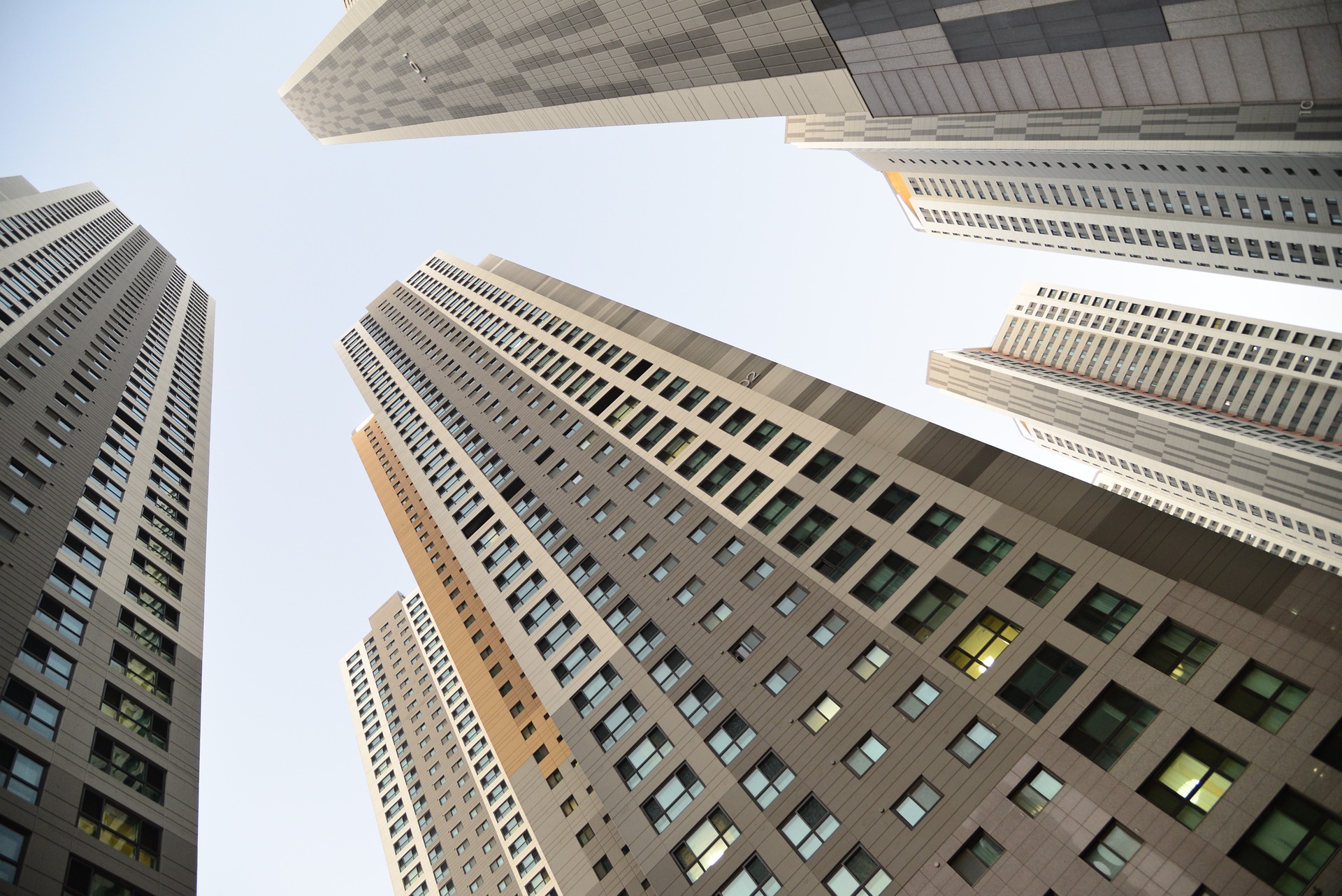
Image Credit: Pixabay
For foreigners and others seeking housing, a city like Seoul that’s been around for a long time offers every kind of housing you could think of, from villas to sleeping rooms. For the most part, all the different types of housing are available all throughout the city. As for location, the main concern should just be being close enough – or having an easy enough transit route – to your daily activities, and maybe trying to be back off the main streets for more quiet nights. Seoul is a metropolis, so there will be convenience stores, delivery services and access to public transportation near anywhere you get a room or apartment.
Apartments
The most common type of housing in Seoul is the apartment (아파트). There are enormous apartment buildings (with 20-30 floors or more) in groups all around the outskirts of Seoul and different parts of town as well as individual buildings of all sizes throughout the city. They come with different numbers of rooms, different amenities and are of different ages, so it’ll be important to get the specifics of any apartment you consider. Laundry hook-ups may be in the shower area of the bathroom or outside in older buildings or there may be no laundry for individual apartments. On the other hand, even older apartments may have 온돌! Some multi-building complexes come with an exclusive parking lot, security guards and a shared outdoor space for residents, including playgrounds, shopping arcades, and outdoor athletic facilities.
One big difference between Seoul and the US is that there are very few cases where young people share an apartment. This is probably because young people traditionally live with their parents until they get married. And if they happen to be from outside of Seoul, they don’t know anyone yet to share an apartment with.
Studio Apartment (원룸)
These days studios (single rooms), 원룸 [원눔; 월룸], are more the trend than자취or 하숙. Studios are usually offered in smaller buildings. They usually come with개인 주방/부엌 (kitchen) and 공동 세탁실 (shared laundry room) with access to 세탁기 (washer) but typically not 건조기 (dryer). If there’s no laundry room, a 빨래방 (laundromat) and 세탁소(drycleaners) are nearby. Usually 가구 (furniture) and 가전제품 (household appliances) come with the house. In most cases there will be 시설 (amenities) such as 고속 인터넷 (high–speed internet connection) or 광역 인터넷 (broad–band internet connection) and even a security camera (CCTV). You may also hear the term 고시텔 to refer to studios. This term comes from 고시, civil service exams, and refers to the usage of these studios by students who need a quiet place away from home to study. This type of housing is especially common in 신촌and 신림동 for students, and in 종로 and 역삼동 with office workers in mind.
Renting
There are some differences in how payment and housing contracts work in Korea as opposed to other countries. Uniquely Korean, 전세 is renting a house for two years by paying a lump–sum fee (“key money”) up-front that is returned to the renter when the term is up. The landlords generally make money through investing and getting interest on the lump sum payment. There can also be realtor’s fees, and the landlord can hold the deposit if the tenant needs to move before the contract is up and new tenants have to be found.
월세 is rent paid monthly, but a deposit must be paid up–front along with first and last month’s rent and realtor fees, oftentimes required in cash. Also, the amount of the deposit can affect the monthly rent rate. The deposit is returned to the tenant at the end of the lease contract period, minus any missed rent payments.
할 수 있어요! I Got This!
Check to see if you can do the following:
- Talk about housing arrangements and options
- Ask questions in a round–about way
| Listening Script
|
|
| 오스틴: | 안녕하세요? 저, 원룸 하나 구하고 있는데요. |
| 부동산 직원: | 네, 어서 오세요. 여기 앉으세요. 뭐 마실 거 한 잔 드릴까요? |
| 오스틴: | 아니요, 괜찮습니다. 감사합니다. |
| 직원: | 어떤 방을 찾고 계시나요? 혼자 쓰실 건가요? |
| 오스틴: | 네, 학교에서도 가깝고 교통도 편리한 곳이면 좋겠는데요. |
| 직원: | 어제 나온 방이 하나 있긴 한데요. 버스 정류장에서 걸어서 5분쯤 걸리고, 동네에 공원, 슈퍼, 커피숍, 빨래방도 다 있고 위치도 아주 좋아요. |
| 오스틴: | 아, 그래요? 가격은 얼마나 하나요? |
| 직원: | 보증금 300만원에 월세 60만원이에요. |
| 오스틴: | 어, 좀 비싸네요. 수도세하고 전기요금 포함된 건가요? |
| 직원: | 네, 가스비도 포함인데 인터넷은 따로 내야 되고요. 요즘 이 동네에서 여기만큼 싼 방은 없어요. 얼마 전에 주인이 집도 고쳐서 아주 깨끗하고요. |
| 오스틴: | 그렇군요. 방은 얼마나 큰가요? |
| 직원: | 침대, 책상, 옷장 다 들어가고, 요리할 수 있는 작은 부엌하고 화장실도 같이 있어요. |
| 오스틴: | 오, 화장실하고 부엌도 있는 줄 몰랐네요. |
| 직원: | 월세 60 만원에 이 집만큼 좋은 방은 구하기 힘들어요. |
| 오스틴: | 네. 동네는 안전한가요? |
| 직원: | 그럼요. 그 집 근처에 경찰서가 있어서 안전해요. |
| 오스틴: | 경찰서요? 진짜 안전하겠네요. 그럼, 가서 그 원룸 한번 볼 수 있나요? |
| 직원: | 네, 물론이죠. 지금 가실까요? |