6 Lesson 6: 몇시에 영화가 시작하는지 알아?
몇 시에 영화가 시작하는지 알아?
학습 목표 Goals
By the end of this lesson, you will be able to:
- Inquire to gather information using indirect questions.
- Ask for and do favors using –아/어 주다.
들어가기 Setting Up
Lesson Focus
- INGREDIENTS – 단어 Vocabulary
- Entertainment/Cultural Activities
- RECIPE – 문법과 표현 Grammar
- A/V–(으)ㄴ/는지 알다/모르다
- V–아/어 주다
- A/V–거나
- LET’S COOK! – 해 봐요! Classroom Tasks
- Interpretive Task 1: A conversation about a get-together
- Interpretive & Interpersonal Task 2: A message from a club president
- Interpersonal & Presentational Task 3: Meet and talk with our guest speaker!
- KOREAN FLAVORS – 한국어와 한국 문화 Korean Language and Culture
- Noun markers (particle) 1
- Popular cultural activities in Korea
- I GOT THIS! – 할 수 있어요! Async. Practices and Tasks
- Integrated Performance Task Link
- WB Link
짝하고 얘기해 봐요! Share your thoughts!
What types of cultural events do you like to watch or take part in? And how would you ask someone about their preferred genre in Korean?
What seems to be happening in the following dialogue?
 |
 |
 |
문화 예술 활동 Entertainment and Cultural Activities
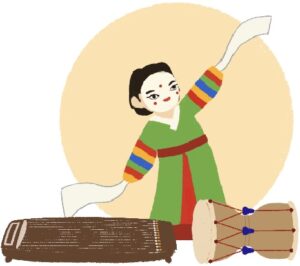 |
 |
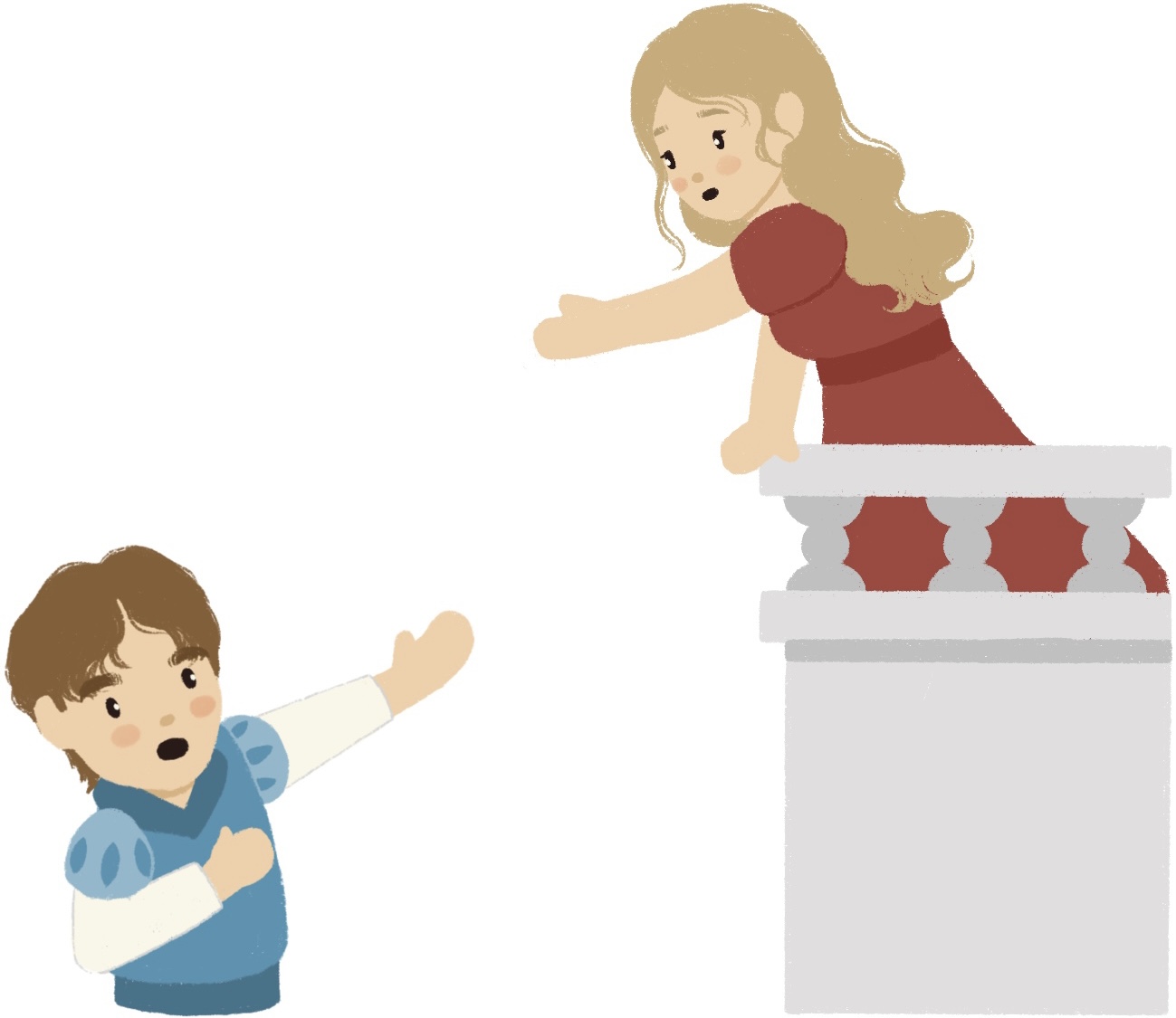 |
 |
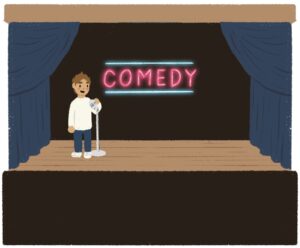 |
| (문화) 행사 | 뮤지컬 | 연극 | 전시회 | 코미디 쇼 |
| (cultural) event | musical | play, theater | exhibition | comedy show |
 |
 |
 |
 |
 |
| 극장 | 공포 영화 | 로맨틱 코미디 (로코) | 예매(하다) | 매진(되다) |
| to have a good personality | to be honest | (room) to be messy | to be good (well-behaved) | to be active |
새 단어와 표현 Other Vocabulary and Expressions
| 가사 | lyrics | 웃다, 웃기다 | to laugh, to make someone laugh (to be funny) |
| 인기 | popularity | 전해주다 | to pass on |
| 좀비 | zombie | 무섭다 | to be scary/scared |
| 주소 | address | 심심하다 | to be bored |
| 걱정(하다) | to worry | 유명하다 | to be famous |
| 구하다 | to seek | 적다 | to be little (quantity) |
| 답장(하다) | to reply | 중요하다 | to be important |
| 빌려주다 | to lend | 아까 | a little while ago |
| 알리다 | to inform | 역시 | as expected, indeed |
| 연락(하다) | to contact | 글쎄(요) | well; I’m not sure; Beats me! |
| 걱정 마(세요). | Don’t worry. | 글쎄 말이야. | That’s what I mean; For sure. |
| 할 수 없지. | There’s nothing we can do. | NOUN대신 | Instead of NOUN |
단어 메모지 Vocabulary Notes
1. 데리고 오다/가다, 데려 오다/가다 To bring/take people
데리다 is a base verb that is NOT used on its own in modern Korean. It is ALWAYS used in a compound verb form and used when someone brings people with them:
| 오늘 그 친구 데려 올 거야? | Are you going to bring that friend today? |
| 생파에 누구 데리고 갈 거야? | Who are you going to take to the birthday party? |
Note that 가지고 오다/가져 오다 is used when someone brings something with them.
| 오늘 선물 가지고 올/가져 올 거야. | I am going to bring a gift today. |
| 피크닉에 뭐 가져 갈 거야? | What are you going to take to the picnic? |
2. Adverb 게 and 히
There are several ways to turn adjectives into adverbs using adverbial suffixes in Korean. -게 is one of them and is very much like English –ly (“happily, slowly”). While English adverbs marked with ly describe how the verb (that is, the action) is done, Korean words marked with -게 add information about the subject or the object (how the subject is experiencing the action, how the action results in the changed experience of the object). Look carefully at the translation of the following sentences.
| 요즘 아주 바쁘게 살아요. | I am very busy/living a busy life these days. (I live very busily these days.) |
| (음식을) 맛있게 드세요. | Enjoy the meal. ([You] eat [the food] deliciously.) |
| 크게 말하세요. | Speak loudly. (Speak (so it can be heard largely.)) |
Translation of certain sentences works best if you use English adjectives:
| 종이에 이름을 작게 쓰세요. | Write your name small on the paper. |
| 걔는 나를 피곤하게 만들어요. | He makes me tired. |
| 시끄럽게 하지 마세요. | Don’t be noisy. |
-히 is another adverbial suffix, but it is more limited and can only work with certain 하다adjectives. (-게 works with any adjectives.):
Meaning-wise, -히 adverbs describe how something is done at that moment, whereas the -게 adverbs give you a bigger picture (how something is changed as a result of the action). Thus, if the manner of the action is the goal of the description (and if it is a 하다-adjective), you are likely to use the -히 adverb, whereas if the resulting change is the focus, -게 adverb is more likely to be used.
| Dictionary Form | 한 Adjective | -히 Adverb | Meaning | -게 Adverb form |
| 조용하다 | 조용한 | 조용히 | quietly | 조용하게 |
| 부지런하다 | 부지런한 | 부지런히 | diligently | 부지런하게 |
| 솔직하다 | 솔직한 | 솔직히 | honestly | 솔직하게 |
| — | — | 천천히 | slowly | — |
| — | — | 열심히 | earnestly, eagerly | — |
| 조용히 하세요. | Be quiet. (Do it in a quiet manner.) |
| 애들 좀 조용하게 만들어줘. | Please make the kids quiet. |
| 천천히 가자. | Let’s go slowly. |
| 열심히 공부해. | Study hard. |
| 추워서 얼굴이 빨갛게 얼었어. | It was so cold their face froze red. |
단어 연습
연습 1.
연습 2.
| 걱정 마 | 글쎄 | 글쎄 말이야 | 대신 | 할 수 없지 |
연습 3.
Complete the following dialogue, using either 어떤 or 어느 more fit for the context.
1. 가: ________________ 친구가 좋으세요?
1. 나: 저는 재미있고 웃기는 친구가 좋아요.
2. 가: 시내에 여러 개 있는데 ________________ 극장이 제일 좋아요?
2. 나: 메가 극장이 제일 크고 좋은 것 같아요.
3. 가: 졸업하고 ________________ 일 하고 싶으세요?
3. 나: 컴퓨터 공학을 전공했으니까 컴퓨터 프로그램일을 하고 싶어요.
4. 가: 학교 근처에 ________________ 한국 식당 음식이 제일 맛있어요?
4. 나: 저는 ‘서울 식당’ 음식이 제일 맛있는 것 같아요.
5. 가: 동아시아 나라 중에 ________________ 나라에 가 보셨어요?
5. 나: 저는 한국하고 중국에 가 봤어요.
6. 가: 서울에 가면 ________________ 곳을 구경하면 좋을까요?
6. 나: 글쎄요. 박물관이나 궁을 구경하면 좋을 것 같아요.
동아시아: East Asia
1. A/V–(으)ㄴ/는지 알다/모르다ASKING EMBEDDED QUESTIONS

Direct questions vs. Indirect questions
Questions asked directly of the listener, like “How are you?” or “When does the movie start?,” are called direct questions. There are occasions, however, when it is useful to phrase a question indirectly. You might do this either to soften the bluntness of the question, or maybe because you are more thinking to yourself rather than asking someone a question. Or you could be being a little cynical. Questions asked this way are called indirect questions, or embedded questions because they are wrapped inside a bigger sentence that is not a question:
| Direct questions | vs. | Embedded questions (underlined) |
| Where have you been till so late? | vs. | I just don’t understand where you have been so late. |
| What is his problem? | vs. | I don’t care what his problem is. |
Question words + A/V–(으)ㄴ/는지 알다/모르다 know/not know what/when/where/why/how/if
Embedded questions often accompany knowledge-related verbs such as 알다, 모르다, 궁금하다 “curious,” 이해 (못) 하다 “to (not) understand,” and 물어보다 “to ask.” You do not need to shuffle the order of words in embedded questions in Korean; instead, the connector –지 is used. Simple! This connector conjugates exactly like –(으)ㄴ데/는데. For verbs (and the verb 있다), use the form –는지; for adjectives (and the verb 이다), use –(으)ㄴ지. For past and completed events, use –았/었는지, and for future and guessing purposes, use –(으)ㄹ지.
Here is a summary of embedded question connector forms:
| Question Words | Tense | Verbs or Adjectives | Suffix | Dictionary Form | -지 form |
| 언제 어디에서/에 누가 무엇을/뭐를 어떻게 Yes/no |
Present | verbs, 있다 | –는지 | 맞다 풀다 재미있다 |
맞는지 푸는지 재미있는지 |
| adjectives, 이다 | –(으)ㄴ지 | 크다 맑다 영화이다 |
큰지 맑은지 영화인지 |
||
| Past | verbs, adjectives | –었는지 | 맞다 크다 영화이다 |
맞았는지 컸는지 영화였는지 |
|
| Future | verbs, adjectives | –을지 | 재미있다 풀다 맑다 |
재미있을지 풀지 맑을지 |
Here are some examples:
| 첫 영화가 몇 시에 시작해요? ⇒ 첫 영화가 몇 시에 시작하는지 아세요? |
What time does the first movie start? ⇒ Do you know what time the first movie starts? |
| 이번 전시회를 어디에서 해요? ⇒ 이번 전시회를 어디에서 하는지 알아요? |
Where is the party this time? ⇒ Do you know where the party is held this time? |
| 형이 누구한테 돈을 빌렸어요? ⇒ 형이 누구한테 돈을 빌렸는지 알아요? |
Who did Hyung (older brother) borrow money from? ⇒ Do you know who Hyung (older brother) borrowed money from? |
When the question has no specific wh– word and if the question can be answered with a yes or no, you use the “connector” if or whether in English:
| Is she going? | ⇒ | I wonder if she is going. |
| Is she going or not? | ⇒ | I want to know whether she is going or not. |
In Korean, you do NOT need any question word. You just need the –(으)ㄴ지/–는지 connector:
| 지금 표를 예매할 수 있어? | Can we reserve a ticket now? |
| ⇒ 가: 지금 표를 예매할 수 있는지 알아? | Do you know if we can reserve a ticket now? |
| 나: 글쎄, (지금 표를 예매할 수 있는지) 잘 모르겠어. | Well, I’m not sure (if you can reserve a ticket now). |
Past tense: A/V–았/었는지 알다/모르다
For the past tense, or completed events, add –었는지:
| 할아버지 생신이 언제였어? | When was grandpa’s birthday? |
| ⇒ 할아버지 생신이 언제였는지 몰라? | Do you not know when grandpa’s birthday was? |
| 그 좀비 영화 무서웠어? | Was that zombie movie scary? |
| ⇒ 그 좀비 영화 무서웠는지 알고 싶네. | I kinda want to know if that zombie movie was scary or not. |
Conjugation
Let’s practice conjugation with this connector! Note that the present–tense forms are conjugated in the same way as the present–tense noun–modifiers, but for the past tense forms, verbs and adjectives are conjugated into the –았/었는지 ending.
| Dictionary Form (Verb)/strong | Present | Past | Dictionary Form (Adjective) | Present | Past |
| 잡다 | 잡는지 | 많다 | 많은지 | ||
| 배우다 | 배웠는지 | 크다 | 컸는지 | ||
| 잡다 | 잡는지 | 많다 | 많은지 | ||
| 만들다 | 만들었는지 | 달다 | |||
| 돕다 | 가볍다 | ||||
| 부르다 | 빠르다 | 빠른지 | |||
| 듣다 | 듣는지 | 취미이다 | 취미였는지 | ||
| 치다 | 시간이다 |
<답> 잡았는지, 배우는지, 만드는지, 돕는지, 도왔는지, 부르는지, 불렀는지, 들었는지, 치는지, 쳤는지, 많았는지, 큰지, 단지, 달았는지, 가벼운지, 가벼웠는지, 빨랐는지, 취미인지, 시간인지, 시간이었는지
연습 1. -(으)ㄴ/는지 알다/모르다
Answer the questions using –(으)ㄴ/는지 알다/모르다 as in the 맛보기.
(맛보기) 가: 극장이 어디에 있어요?
(맛보기) 나: 글쎄요, 극장이 어디에 있는지 잘 모르겠어요.
- 주영 씨는 요즘 무슨 음악을 들어요?
- 이 노래는 어느 가수가 불렀어요?
- 요즘 인기 있는 문화 행사가 뭐예요?
- 그 연극 표가 있는 날이 언제예요?
- 인터넷에서 영화 표를 예매할 수 있어요?
- 오늘 전시회에 사람들이 왜 적어요?
- 뮤지컬 표를 사려고 하는데 어디서 팔아요?
- 그 뮤지컬 표가 언제 매진됐어요?
연습 2. –(으)ㄴ/는지 알다/모르다
Complete the following dialogue using –(으)ㄴ/는지 + 알다/모르다.
(맛보기) 가: 지금 민지가 어디에 있는지 알아요? [to be located]
(맛보기) 나: 네, 알아요. 민지는 지금 학교에서 수업을 듣고 있어요.
- 가: 한국 미술 전시회가 언제 _____? [to be]
나: 네, 알아요. 2월 14일부터예요. - 가: 시노 씨 가방이 왜 _____? [to be heavy]
나: 네, 가방 안에 노트북 컴퓨터가 두 개나 들어 있어서 무거워요. - 가: 미나 씨가 왜 매일 두 시간 씩 _____? [to run]
나: 네, 미나 씨가 하프 마라톤 대회에 나가려고 준비하고 있어요. - 가: 마야가 아까 누구한테 _____? [to contact]
나: 아니요, 몰라요. - 가: 지훈 씨가 공포 영화를 _____? [to like]
나: 아니요, 몰라요. - 가: 어제 웨이가 어떤 동아리에 _____? [to join]
나: 아니요, 모르겠어요. - 가: 그 책을 어디에서 _____? [to sell]
나: 네, 몰라요. - 가: 행사 표를 어떻게 미리 _____? [can buy]
나: 네, 알아요. 인터넷으로 예매하면 돼요.
연습 3. –(으)ㄴ/는지 알다/모르다
Test your knowledge about Korea using –(으)ㄴ/는지 + 알다/모르다.
(맛보기) What is the tallest mountain in Korea?
(맛보기) 가: 한국에서 어느 산이 제일 높은지 아세요?
(맛보기) 나: (Yes) 네, 알아요! 백두산이에요. Or (No) 아니요, 한국에서 어떤 산이 제일 높은지 모르겠어요.
1. What time is it right now in Korea?
2. What language do they speak in North Korea?
3. How do you make kimchi?
4. Who is the most popular singer in Korea?
5. What is the biggest company in Korea?
6. How to study Korean vocabulary?
7. Who is the inventor of Hangul and when was it created? (Helpful Vocabulary: 들어지다 to be made)
8. Your own
연습 4. -(으)ㄴ/는지 알다/모르다
Create a short dialogue about the following topics using the –(으)ㄴ/는지 알다/모르다.
(맛보기) 요즘 인기 있는 뮤지컬
(맛보기) 가: 요즘 인기 있는 뮤지컬이 뭔지 알아요?
(맛보기) 나: 네, 알아요! ‘영웅’이 요즘 인기 있어요.
1) 한국에서 제일 유명한 가수
2) 미국 사람들이 제일 많이 본 한국 영화
3) 제일 매운 한국 음식
4) 서울에서 재미있는 공연을 볼 수 있는 곳
5) 내가 태어난 도시
6) 효과적인 한국어 공부 방법
효과적이다: to be effective
2. V–아/어 주다 DO SOMETHING FOR

주다 and 드리다 give
드리다 is a humble expression of 주다 and is used when the subject is giving something to someone older or with a higher social rank:
| 친구한테 연락했어요. | I contacted my friend. |
| 부모님께 연락드렸어요. | I contacted my parents. |
A/V–아/어 주다/드리다 do something for
Most of the time, when something is done for a beneficiary, a helping verb construction involving 주다 or 드리다 is used, because the doer is doing the favor of “giving” that action:
| 가: 여기에 주소를 좀 써 주세요. 나: 네, 여기에 써 드릴게요. |
Please write your address here (for me). Yes, I will write it here for you. (formal) |
| 가: 제가 표를 예매해 드릴까요? 나: 네, 예매해 주세요. 감사합니다. |
Would you like me to reserve a ticket (for you)? (formal) Yes, please reserve one (for me). Thank you. |
아/어 주셔서 감사하다/고맙다 thank you for
The following expressions are frequently used in everyday conversations.
| 도와주다 | to offer help; to help out | 빌려주다 | to lend |
| 가르쳐주다 | to teach; to tell/inform | 사주다 | to buy (for someone) |
| 숙제 도와 줘서 고마워요. | Thank you for helping me with my homework. |
| 핸드폰 빌려줘서 고마워. | Thanks for lending me your phone. |
| 초대해 주셔서 감사합니다. | Thank you for inviting me. (formal) |
Conjugation
This is an –아/어 type conjugation. Simply add the helping verb 주다 or 드리다 to the –아/어 form of the main verb with the meaning.
| Dictionary Form | -아/어 주다 | Dictionary Form | -아/어 주다 |
| 보내다 | 보내 주다 | 만들다 | |
| 굽다 | 듣다 | ||
| 알리다 | 가르치다 |
<답> 보내 주다, 구워 주다, 알려 주다, 만들어 주다, 들어 주다, 가르쳐 주다
연습 1. -아/어 주다
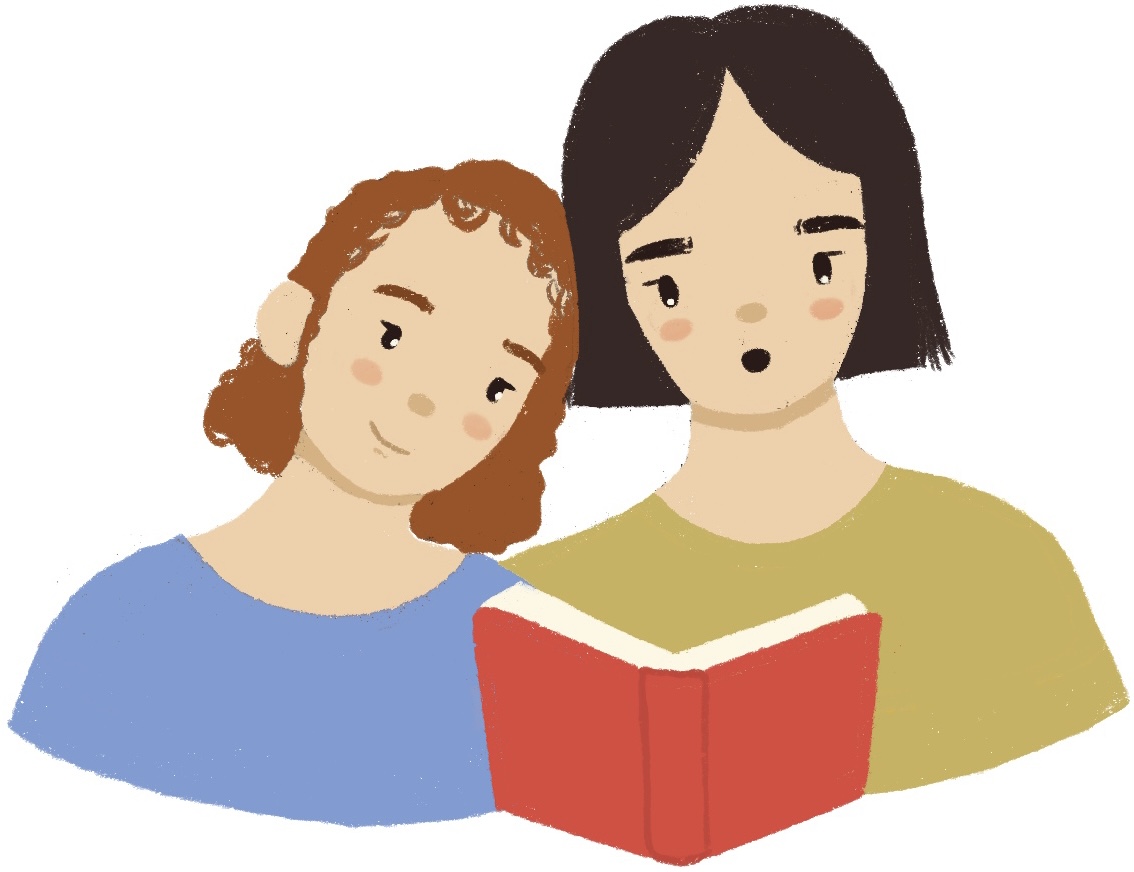
Look at the pictures below and make request using –아/어 주세요 as in 맛보기.
 |
 |
 |
| (맛보기) 책을 읽다
⇒ 책을 읽어 주세요. |
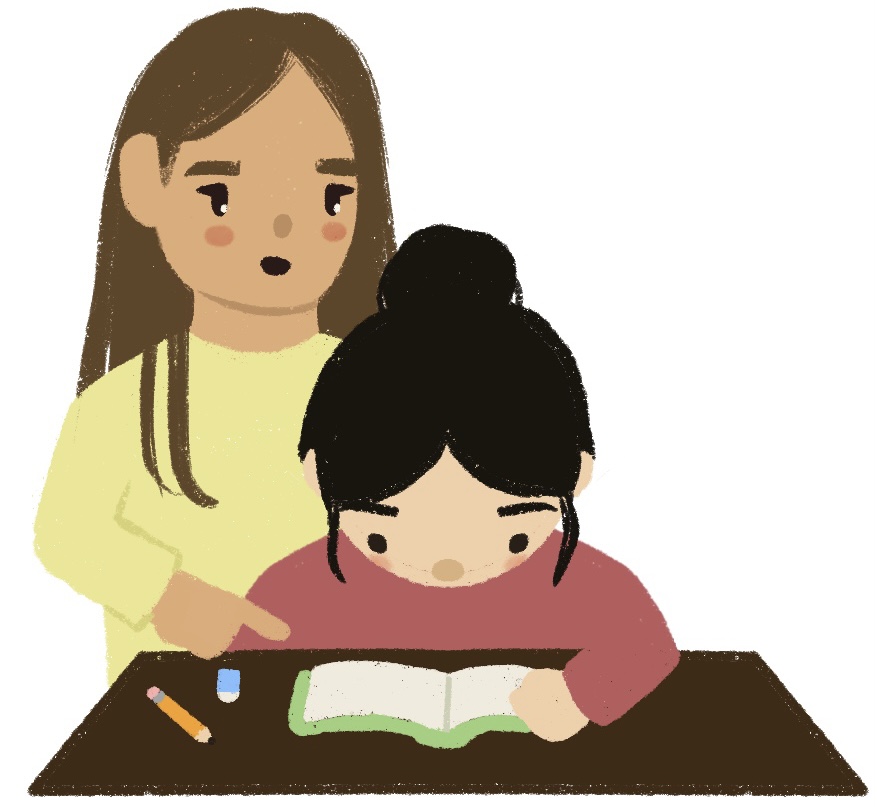
1) 전시회 표를 예매하다 | 2) 여기에서 사진을 찍다 |
 |
 |
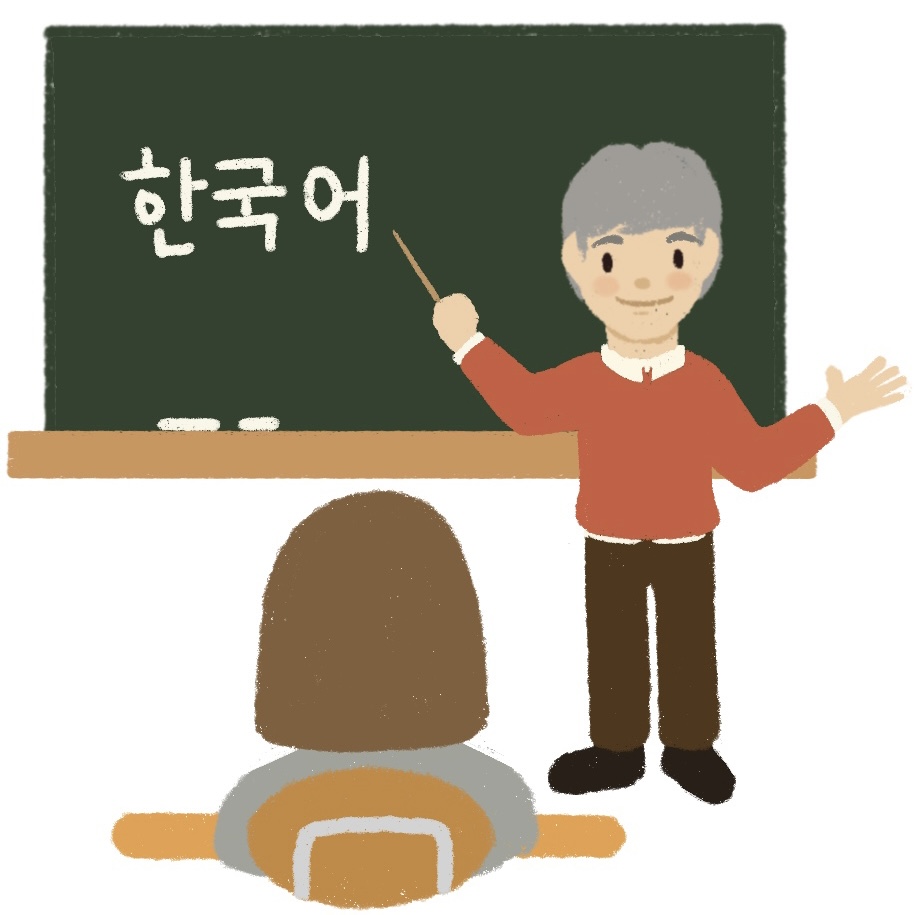 |
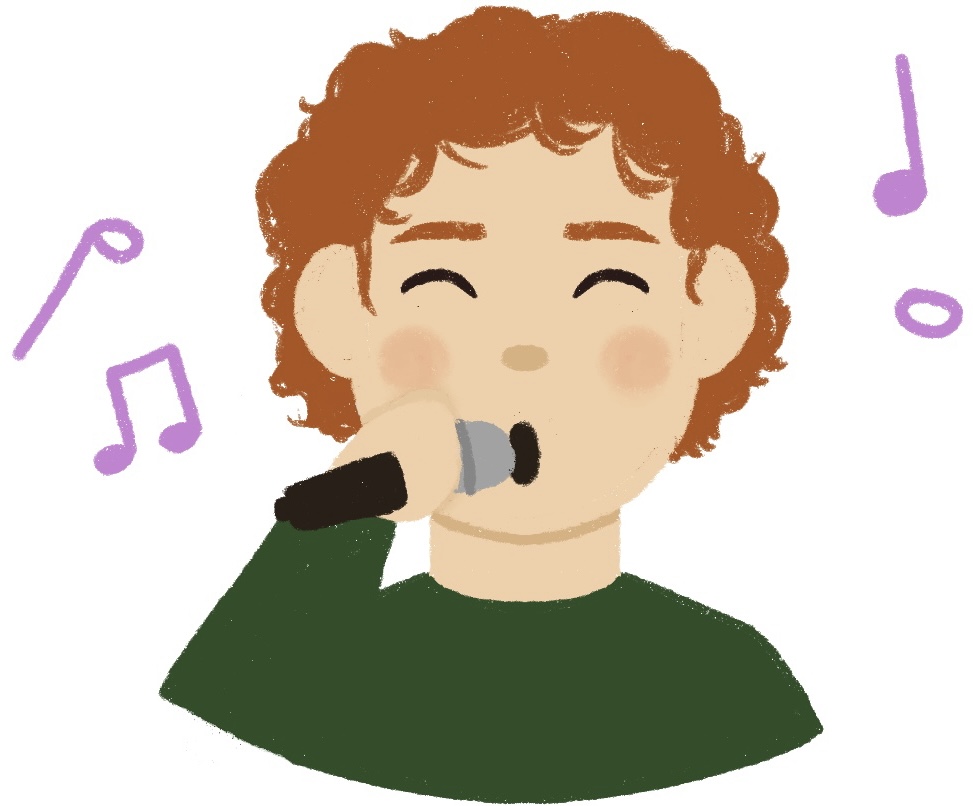
| 3) 저녁을 만들다 | 4) 숙제하는 걸 돕다 | 5) 한국어를 가르치다 |
 |
 |
 |
| 6) 노래를 부르다 | 7) 주소를 쓰다 | 8) 내일 연락하다 |
연습 2. –아/어 주다
(맛보기) 친구가 BTS 콘서트 티켓을 구해 줬어요. [구하다]
다른 사람: other people
연습 3. –아/어 주다
Make requests in the following situations, using –아/어 주다 as shown in 맛보기.
(맛보기) 선생님 말 소리가 안 들립니다. ⇒ 선생님, 크게 말씀해 주세요.
1. 머리를 자르러 갔습니다. 5 센티미터 (cm) 쯤 자르고 싶습니다.
⇒ _______________.
2. 극장에 룸메이트하고 영화를 보러 갔는데 지갑을 안 가져갔습니다.
⇒ (룸메이트 이름), _______________.
3. 문을 열어야 되는데 가방하고 책을 들고 있어서 못 엽니다.
⇒ (친구 이름), _______________.
4. 동생하고 영화를 보려고 하는데 시간이 없어서 예매를 못합니다.
⇒ (동생 이름), _______________.
5. 숙제를 하는데 너무 어렵습니다. 반 친구한테 문자를 보냅니다.
⇒ (친구 이름), _______________.
6. 오랜만에 집에 갔는데 아버지가 만드신 불고기가 먹고 싶습니다.
⇒ 아빠, _______________.
7. 배드민턴을 치고 싶은데 같이 칠 사람이 없습니다.
⇒ (친구 이름), _______________.
8. 선생님께 연락 드리려고 하는데 연락처를 모릅니다. 친구들한테 물어 봅니다.
⇒ (친구 이름), _______________.
연락처: contact information
연습 4.–아/어 주다
감사합니다! Write thank you messages to the following people.
(맛보기) [할머니]
(맛보기) 할머니, 재미 있는 책을 읽어 주셔서 감사합니다.
1. 부모님
2. 언니/누나/형/오빠/동생
3. 친한 친구
4. 우리 반 친구
5. 한국어 선생님
6. Create your own message.
3. A/V–거나 OR

Noun(이)나 or
We learned that –(이)나means “or” and connects nouns:
| 가: 시간 있을 때 주로 뭐 하세요? | What do you usually do when have spare time? |
| 나: 연극이나 전시회를 보러 가요. | I go to see plays or exhibits. |
A/V–거나 either… or…
–거나 means the same “or,” but it conjoins verbs or adjectives:
| 가: 시간 있을 때 주로 뭐 하세요? | What do you usually do when have time? |
| 나: 연극을 보러 가거나 전시회에 가요. | I go to see plays or exhibits. |
| 가: 어떤 영화 좋아해? | What kind of movies do you like? |
| 나: 너무 슬프거나 무섭지 않은 영화가 좋아. | I like movies that are not too sad or scary. |
A/V–고 vs. A/V–거나
–고 is a shortened version of 그리고, and it conjoins two sentences. Whereas it indicates the subject performs both actions, in sentences connected with –거나, the subject entertains options.
주말에 친구들하고 만나서 코미디 쇼를 보고 같이 저녁도 먹었어요.
I met my friends on the weekend, and we watched a comedy show. We also ate dinner together.
주말에는 친구들하고 만나서 같이 코미디 쇼를 보거나 저녁을 먹어요.
On the weekends, I meet my friends and watch a comedy show or eat dinner together.
연습 1. –거나
(맛보기) 부모님께 이메일을 쓸 때도 있고 전화를 할 때도 있어요.
⇒ 부모님께 이메일을 쓰거나 전화를 해요.
연습 2. –거나
Using -거나, write sentences based on the information provided in the table below..
| When | When | What I do |
| (맛보기) 아프다 | 힘들다 | 잠을 많이 자다. |
| 1) 기분이 좋다 | 즐겁다 | 노래를 부르다. |
| 2) 영화를 보다 | 맥주를 마시다 | 팝콘을 먹다. |
| 시험이 있다 | 할 일이 많다 | 잠을 잘 못 자다. |
| 열이 나다 | 기침을 하다 | 병원에 가다. |
| 힘들다 | 피곤하다 | 집에서 푹 쉬다. |
| 우울하다 | 슬프다 | 친구하고 시간을 보내다. |
| 비가 오다 | 흐리다 | 낮잠을 자고 싶다. |
| 강아지하고 놀다 | 좋아하는 음악을 듣다 | 행복해지다. |
1. _________________________.
2. _________________________.
3. _________________________.
4. _________________________.
5. _________________________.
6. _________________________.
7. _________________________.
8. _________________________.
연습 3. -거나
Complete the following dialogues with advice using –거나 or –고.
(맛보기) 가: 졸리고 피곤해요.
(맛보기) 나: 그럼 커피를 마시거나 초컬릿을 먹어 보세요.
1. 가: 주말인데 약속이 없어서 심심해요. 시간을 어떻게 보낼까요?
나: _________________________.
2. 가: 친구한테 이메일을 했는데 답장을 안 하네요. 어떻게 하지요?
나: _________________________.
3. 가: 다음 주에 있는 한국어 말하기 시험 준비를 어떻게 해야 할까요?
나: _________________________.
4. 가: 요즘 몸도 좀 아프고 날씨도 계속 안 좋아서 우울해요.
나: _________________________.
5. 가: 친구들과 가족을 오랫동안 못 만나서 많이 보고 싶어요. 요즘 많이 외로워요.
나: _________________________.
6. 가: 배탈이 나서 배가 아파요.
나: _________________________.
7. 가: 공부를 하고 있는데 옆방에서 파티를 해요. 너무 시끄러워요.
나: _________________________.
8. 가: 내일 뮤지컬을 보려고 했는데 표가 다 매진됐어요.
나: _________________________.
연습 4. –거나
Your hometown friends are coming to visit you next week. Plan three things to do using –거나.
(맛보기) 친구가 오면 유명한 맛집에 가거나 인기 있는 카페에 갈 겁니다.
1. __________거나 __________.
2. __________거나 __________.
3. __________거나 __________.
4. 종합 연습 Role Play
Create a role play with your partner using the key grammar expressions and new vocabulary from this lesson. Include 5 to 6 meaningful rounds of dialogue. Take turns and feel free to add details to make the conversation lively.
- Context: Two friends are having a phone conversation to plan a get-together centered around cultural events. Discuss various options available for cultural activities and decide on which event to attend. Offer assistance in purchasing tickets or making reservations for the chosen event.
- Participants: Two friends who have not been together for a while
- Key Expressions: –(으)ㄴ/는지 알다/모르다, –아/어 주다, –거나
- Sample dialogue:
 |
 |
 |
 |
Interpretive Task 1. 듣기
Dabin’s friend, Hoyoung, is visiting her this weekend. Listen to the conversation and answer the following questions.
1. What type of movie does each person like to watch and why?
| Dabin | Hoyoung | Willow | |
| What type of movie? | |||
| Why? |
2. After all, which movie are they going to watch, and at what time?
Helpful Vocabulary
주인공: main character
Interpretive & Interpersonal Task 2. 읽고 쓰기
A Message from a Club President
Your hobby club president sent out an email containing important messages to the members regarding the upcoming club event. Read the message and reply accordingly.
안녕하세요, 자전거 동아리 회원 여러분!
건강히 잘 지내고 계시지요? 벌써 여름이 가고 시원한 가을이 온 것 같습니다.
다음 주말에 함께 한강 자전거 여행을 하려고 합니다. 그래서 회원 여러분의 의견을 구합니다.
- 이번 한강 자전거 여행에 올 수 있는지 알려 주세요.
- 언제 만나고 싶은지 알려 주세요 (예: 토요일 오전, 토요일 오후, 일요일 오전…)
- 어떤 음식을 먹고 싶은지 추천해 주세요. (예: 한식, 중식, 일식, 샌드위치)
- 안 먹거나 못 먹는 음식이 있는지 꼭 알려 주세요. (예: 소고기, 땅콩…)
이번 주 수요일 5 시까지 이메일로 답장을 해 주시면 감사하겠습니다. 회비는 (10,000원) 벤모나 현금으로 내 주세요. 그리고 모든 행사에서 마스크를 꼭 써 주세요.
감사합니다.
캐빈드림
Helpful Vocabulary
의견 opinion
추천하다 to recommend
회비 club due
Interpersonal & Presentational Task 3. 말하고 발표하기
Meet and Talk with Our Guest Speaker!
You are invited to the Korean Community School as a guest speaker. Your interview host will prompt questions that were collected from the audience students in advance.
Role Play:
- Interviewer: Select 5–6 questions for your guest speaker.
- Guest speaker
Switch the role and conduct an interview.
(e.g. 질문 1: 시간이 있을 때 보통 뭐 하시는지 말씀해 주세요., 질문 2: 왜 그 취미 활동을 좋아하시는지 말씀해 주세요. etc.)
Language Point: 조사 Noun Markers (Particles) 1
Korean is a beautiful world of endings, markers, connectors and particles. As you know, Korean uses markers to indicate grammatical relationships between parts in a sentence or to add or delimit meanings of parts in a sentence. You know the big three, main noun markers –– for Subject, Object, and Topic –– but there are lots more markers that can be attached to nouns, and some can even be combined (or “stacked”)! Let’s review the first set of markers that show grammatical relations of the attached noun. Note that these markers may not stack.
| Meaning/Usage | Notes | Examples | |
| -이/가 | subject marker | marks a noun as the subject of a sentence when no other meaning is implied | 이름이 뭐에요?
여기가 저희 집이에요. 저는 김치가 맛있어요. |
| negative marker | marks the noun that is being negated | 이건 제 가방이 아니에요. | |
| focus marker | provide focus “not anything else but this very thing/person…” (typically used in answers to questions asking for ‘who, what…’) |
이건 제 가방이 아니에요. 그 것도 제 가방이 아니에요. 저게 (=저 것이) 제 가방이에요.
This is not my bag. That is also not my bag. That over there is my bag. A: 이 창문을 누가 깼지? B: 죄송해요. 제가 깼어요. A: Who broke this window, do you know? B: I’m sorry. It is me who broke it/I broke it. |
|
| -을/를 | object marker (marks the object of transitive verbs) | marks the noun that is acted upon or affected by the verb in a sentence | 어제는 친구들하고 같이 영화를 봤어요. |
| redundant object marker | used after a number-counter combination | 초콜렛을 세 개 먹었어요. Or,
초콜렛 세 개를 먹었어요. |
|
| emphasis marker for place | marks a place noun with emphasis | 산토끼 토끼야, 어디를 가느냐?
Hey bunny, where exactly are you going? 어디를 앉아? Where do you think you are sitting? |
|
| -의 | genitive marker ‘s |
used after a possessor noun (pronounced as 에 often absent in spoken Korean) | 동호(의) 학교 생활 나(의) 책 = 내 책 |
| indirect object marker for animate noun | used after an animate noun that is a recipient | 동호가 은비한테 생일 선물을 줬어요. | |
| animate source marker | used after an animate noun that is a giver/origin of an object or activity | 은비가 동호한테서 생일 선물을 받았어요. |
한국 문화 길잡이
한국인들의 문화 활동 Popular Cultural Activities in Korea
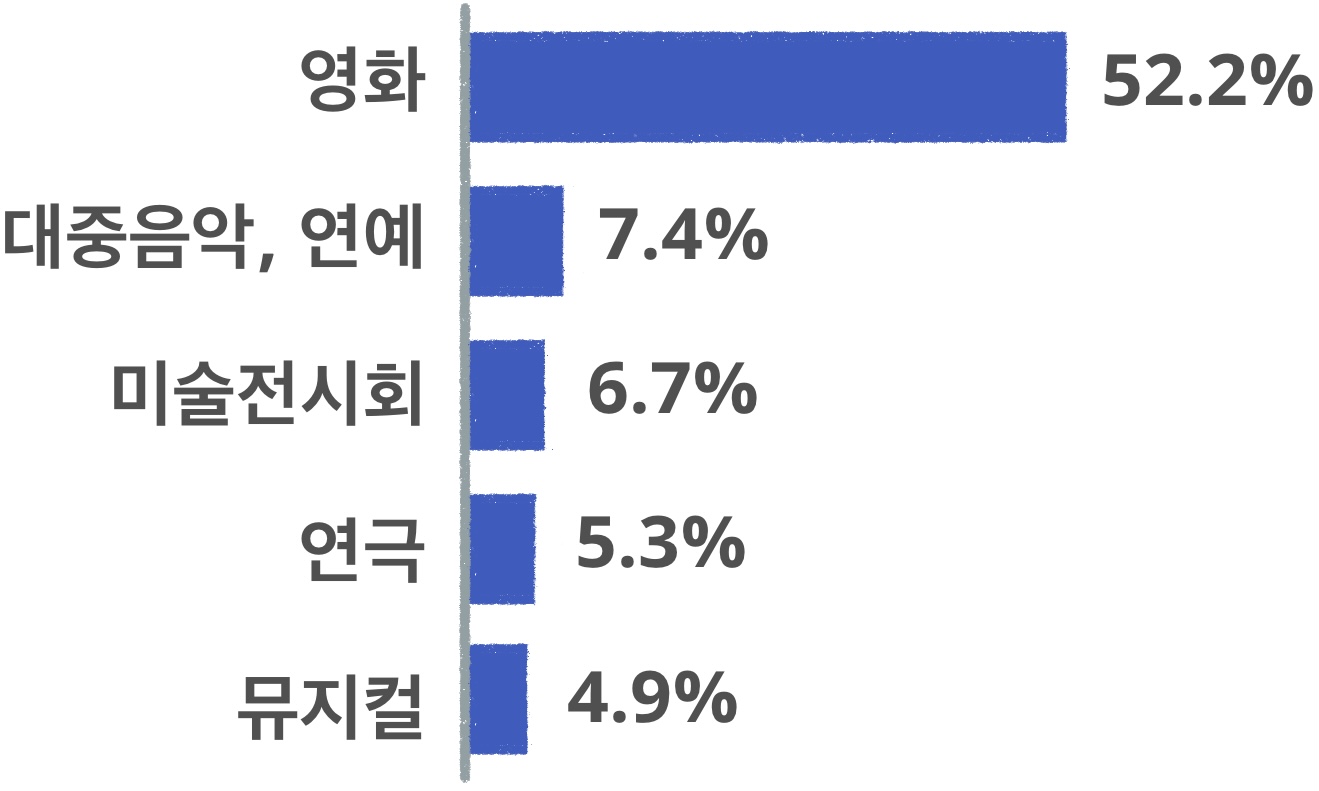
As Koreans are known for their avid love of culture, they engage in various cultural activities and events throughout the year. According to the 2022 survey conducted by the Ministry of Culture, Sports, and Tourism, the most sought-after cultural events were movies, followed by popular music events such as concerts and art exhibitions. Theatrical and musical performances were also popular choices among Korena people. When you visit Korea next time, consider exploring the following cultural venues to make the most of your visit.
박물관
국립중앙박물관 National Museum of Korea
국립민속박물관 National Folk Museum of Korea
미술관
극장
Visit Seoul City’s official blog for more information
할 수 있어요! I Got This!
Check to see if you can do the following:
- Gather information using indirect questions.
- Ask for favors using –아/어 주다
| Listening Script
윌로우: 다빈아, 호영아, 진짜 오랜만이다. 반가워! 호영: 와, 정말 반갑다. 다빈: 얼굴 보니까 좋다! 윌로우: 나도! 우리 오늘 뭐 할까? 다빈: 저녁 먹고 영화 보거나 볼링 치러 가는 거 어때? 호영: 어, 난 다 좋아. 윌로우, 넌 어때? 윌로우: 영화가 어때? 요즘 재미있는 좀비 영화가 나왔는데 같이 볼래? 호영: 음… 좀비 영화? 좀 무섭지 않을까? 나는 코미디 영화 좋아하는데 윌로우: 아, 무서운 공포영화는 나도 못 보는데, 이번 좀비 영화는 코미디 영화라서 괜찮을 거 같아. 다빈: 나는 로코도 좋고 코미디 영화도 괜찮아. 너무 슬프거나 무섭지 않은 영화가 좋은데. 그럼 호영이, 네가 손님이니까 네가 정해 줘. 호영: 그럼 이번에는 로코 봐도 될까? “My Bestie 2” 어때? 다빈: 아, 역시 우리 호영이는 로코 좋아해! 윌로우: 좋아! 저녁에 영화가 몇 시에 시작하는지 알아? 나는 전화 배터리가 없어서… 다빈아, 체크해 줄래? 다빈: 앗…. My Bestie 2는 오늘하고 내일 완전 다 매진이야. 어떡하지? 호영: 그럼 그 영화 대신 “옥토퍼스 게임” 영화 보자. 액션 영화야. 윌로우: 아, 어떤 영화인데? 다빈: 액션 영화인데 돈이 없는 주인공이… 호영: 잠깐, 스포일러는 얘기하지 말아줘. 그 영화도 진짜 재미있을 거 같아. 8시 표 있어? 다빈: 아니, 7시 반 표가 있네. 지금 살까? 윌로우: 어, 좋아. 영화관 가면 팝콘도 사 먹자. 호영: 그래! 오늘 팝콘은 내가 살게! |