11 Lesson 11: 연말인데 송년회 합시다!
연말인데 송년회 합시다.
By the end of this lesson, you will be able to:
- Propose and organize gatherings and plan details.
- Express intention and guesses for the near future using (으)ㄹ테니까.
들어가기 Setting Up
Lesson Focus
- INGREDIENTS – 단어 Vocabulary
- End-of-year party and get-together
- RECIPE – 문법과 표현 Grammar
- V–(으)ㅂ시다
- A/V–(으)ㄹ 테니까
- V–겠–2
- LET’S COOK! – 해 봐요! Classroom Tasks
- Interpretive Task 1: A conversation at the club meeting
- Interpretive & Interpersonal Task 2: Group chat messages on the end of the year party
- Interpersonal & Presentational Task 3: Invitation to an end of the year party
- KOREAN FLAVORS – 한국어와 한국 문화 Korean Language & Culture
- Irregular conjugation: ㄹ–final verbs
- How Koreans celebrate the end of the year
- NOW YOU TRY! – 스스로 해봐요! Async. Practices and Tasks
- WB Link
- Communicative Task Link
짝하고 얘기해 봐요! Share Your Thoughts!
How do you celebrate the end of the year in your culture? Have you ever planned anything to celebrate it?
Now let’s read these two dialogues. What are they talking about?
 |
 |
 |
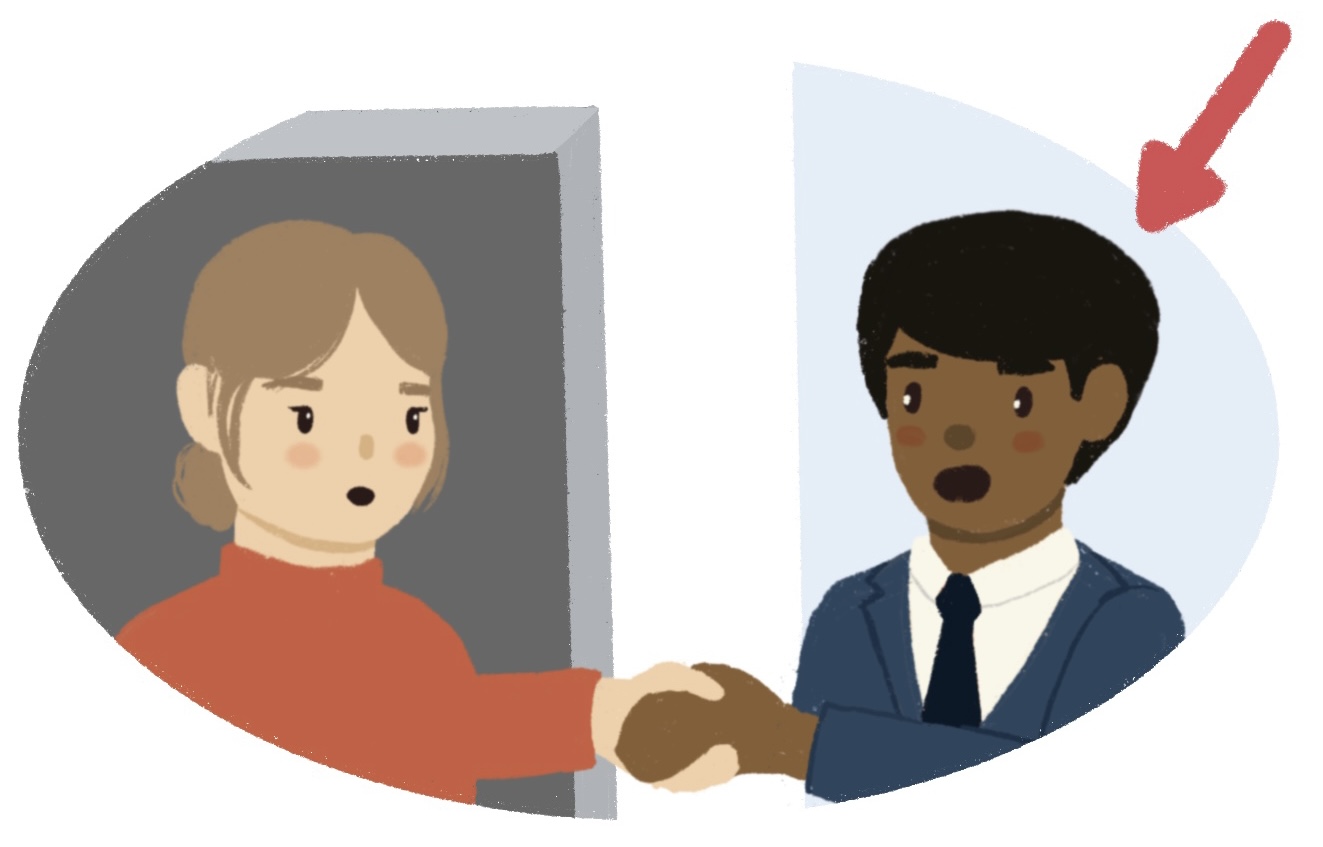
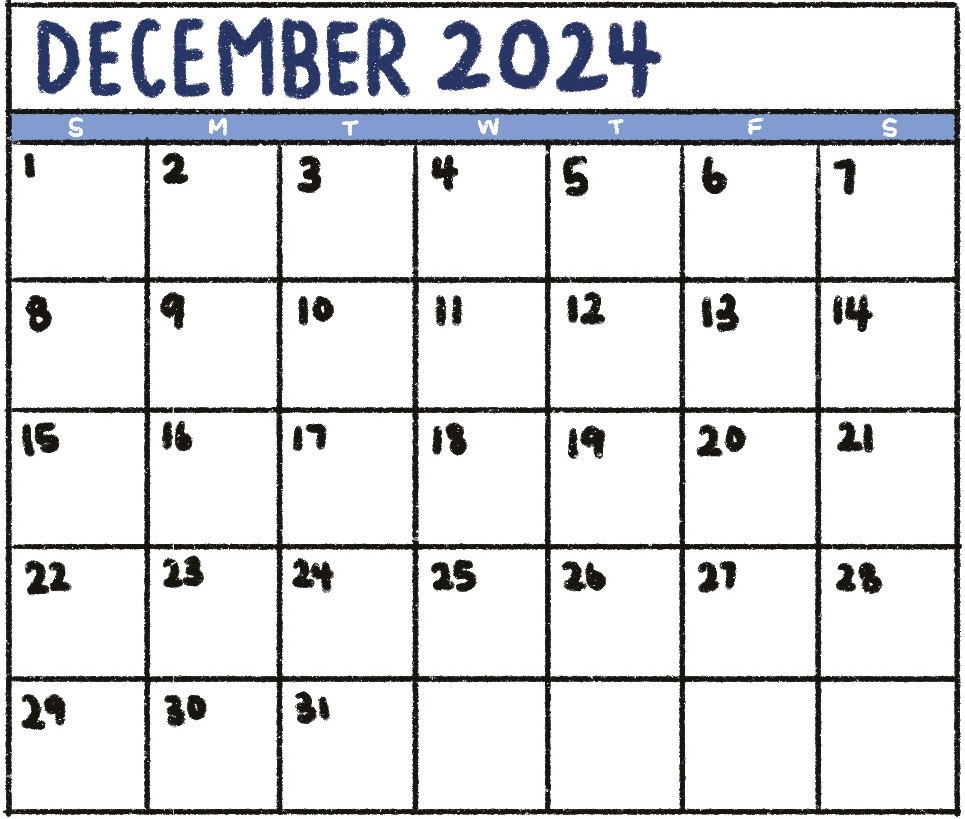
송년회와 모임 End-of-Year Party and Get-Together
 |
 |
 |
 |
 |
| 손님 | 송년회 | 술 | 연말 | 음료수 |
| guest | end-of-year party | alcohol | end of the year | beverages |
 |
 |
 |
 |
 |
| (모임) 장소 | 초대장 | 회비 | 배달(하다) | 주문(하다) |
| location, venue (for a gathering) | invitation card | membership fee, due | to deliver | to order |
새 단어와 표현 New Vocabulary and Expressions
| 날짜 | date | 생기다 | to be formed, appear, arise, come to be |
| 동료 | coworker/colleague | 전하다 | to pass on, to transmit |
| 둘째 | the second | 종강(하다) | to finish a course, semester |
| 약속 | promise, appointment | 참석(하다) | to attend |
| 여러분 | you all, everyone | 넓다 | to be spacious |
| 한식당 | Korean restaurant | 다른 | different, other |
| 걷다 | to collect, gather | 부족하다 | to be insufficient |
| 마치다 | to finish | 즐겁게 | pleasantly |
| 2(이)차 | second round | NOUN(으)로 하다 | I’ll go with N |
| 기대되네요! | I am looking forward to it. | 좋은 생각이에요. | That’s a good idea. |
단어 메모지 Vocabulary Notes
1. 약속 Promise or appointment
약속 can mean a “promise” or an “appointment/plan” in Korean.
| 약속 꼭 지킬 거지? 이번에도 어기면 안돼! | You will keep your promise, won’t you? You’d better not break your promise again this time! |
| 오늘은 다른 약속이 있어서 먼저 가 볼게요. | I have another/prior engagement (appointment) so I’ll be leaving before you (now). |
2. 장소/곳 Place
장소 and 곳 mean the same thing (place) and are both frequently used on signs and posters for “place (to meet for an event).” While 장소 is a full, independent noun, however, 곳 can only be used with a preceding modifier (이곳, 저곳, 콘서트 하는 곳, etc.) 데 is another dependent noun like 곳 with more restricted usage. It can be only used with a full clause modifier (만나는 데, 예쁜 데), but it cannot be modified with determiners like “이” (이데, 그데, 저데).
| 시내에는 모임을 할 데가 많아요. | There are a lot of venues for gathering in downtown. |
| 송년회 장소를 예약해 주세요. | Reserve a place for an end-of-year gathering. |
3. Korean Ordinal Numbers 첫째, 둘째, 셋째
The suffix –째, indicating a rank, is attached to Korean native numbers to create ordinal numbers. These numbers function as modifiers for nouns you are enumerating, for example, 첫째 주 “the first week.”
(1) 첫째, 둘째, 셋째, 넷째, 다섯째, 여섯째, 일곱째, 여덟째, 아홉째, 열째 the first, the second, the third….
The suffix –번째 is more widely used as it indicates the order of actions that happen consecutively.
(2) 첫 번째, 두 번째, 세 번째, 네 번째, 다섯 번째, 여섯 번째, 일곱 번째, 여덟 번째, 아홉 번째, 열 번째
| 그 감독은 첫째 딸이다. | The director is the eldest daughter. |
| 그 감독은 벌써 상을 네 번째 받았다. | The director received the award for the fourth time. This is my third trip to Jeju. (third time traveling to Jeju) |
4. N–(으)로 하다 I’ll make it (noun)
The idiomatic expression “Noun–(으)로 하다” means “I’ll make it N”, or “I’ve decided on N.”
| 가: 모임 장소는 어디가 좋을까요? | What would be a good venue for our gathering? |
| 나: 새로 생긴 한식당으로 합시다. 넓고 음식도 맛있거든요. | Let’s do at the new Korean restaurant. It is spacious, and the food is great, too. |
단어 연습
연습 1.
연습 2.
| 송년회 | 약속 | 장소 | 종강 | 초대장 | 회비 |
연습 3.
Choose the appropriate expression from the box below and complete the following invitation card
| 날짜 | 음료수 | 장소 | 즐겁게 | 참석 | 회비 |
| 회사 송년회 안내
Image Credit: Pixabay |

제공되다: to be provided
1. V–(으)ㅂ시다 Let’s

1. Review: Proposals in Korean
You know you can invite someone to do something together if you use the –어요 ending with 우리 (같이):
| 우리 송년회 해요. | Let’s throw an end-of-year party. |
In casual speech, –자 and –지 말자 are used to extend your invitations.
| 송년회 하자. | Let’s throw an end-of-year party. |
| 송년회 하지 말자. | Let’s not throw an end-of-year party. |
2. V–(으)ㅂ시다 and –지 맙시다 let’s and let’s not
Remember how to say –(으)세요 “Please do” and –지 마세요 ”Please don’t” from Lesson 9 of Book 1? Quite similarly, the expressions –(으)ㅂ시다 “Let’s” and –지 맙시다 “Let’s not” form a parallel pair to them, specifically for making an invitation or request in a polite formal setting:
| 송년회 합시다. | Let’s throw an end-of-year party. |
| 음식을 한식당에서 배달시킵시다. | Let’s have food delivered from the Korean restaurant. |
| 이번에는 송년회 하지 맙시다. | Let’s not throw an end-of-year party this time. |
| 종강 파티에서 술 마시지 맙시다. | Let’s not drink at the end-of-semester party. |
Though – (으)ㅂ시다 is more formal than –자, it still sounds too direct and too forward when used toward one’s elders or superiors. There you need to use more complex, indirect paraphrases.
| 이번 모임은 새로 생긴 한식당에서 할까요?/하면 어떨까요?/하는 게 어때요? | How about having a gathering at the new Korean restaurant this time? |
3. Conjugation
Note that verbs before –(으)ㅂ시다 and –지 맙시다 are conjugated differently due to the fact that –(으)ㅂ시다 begins with a vowel and –지 맙시다 does not. Let’s try on your own!
| Dictionary Form | –(으)ㅂ시다 | –지 맙시다 | Dictionary Form | –(으)ㅂ시다 | –지 맙시다 |
| 보내다 | 보냅시다 | 보내지 맙시다 | 만들다 | ||
| 굽다 | 듣다 | ||||
| 알리다 | 보다 |
<Answer key> 구웁시다, 굽지 맙시다, 알립시다, 알리지 맙시다, 만듭시다, 만들지 맙시다, 들읍시다, 듣지 맙시다, 봅시다, 보지 맙시다
연습 1. –(으)ㅂ시다, –지 맙시다
연습 2. –(으)ㅂ시다, –지 맙시다
| 걷다 | 찍다 | 만들다 | 하다 | 듣다 | 타다 | 부탁하다 | 넣다 | 배우다 |
연습 3. –(으)ㅂ시다, –지 맙시다
Complete the following dialogues using either the –(으)ㅂ시다 or –지 맙시다 form.
(맛보기) 가: 오늘 같이 드라마를 볼까요?
(맛보기) 나: 드라마는 너무 기니까 드라마를 보지 맙시다. 영화를 봅시다.
(맛보기) [드라마를 보다 X / 영화를 보다 ㅇ]
1. 가: 다음 주에 교수님을 뵈러 갈까요?
1. 나: 다음 주는 봄방학이니까 ______________________________________.
1. [다음 주에 뵈러 가다 X / 그 다음 주에 뵈러 가다ㅇ]
2. 가: 다음 학기에 경영학 수업을 들을까요?
2. 나: ______________________________________.
2. [경영학 수업을 듣다 X / 한국학 수업을 듣다 ㅇ]
3. 가: 송년회 음식은 한 사람이 한 개씩 가지고 올까요?
3. 나: ______________________________________.
3. [한 사람이 한 개씩 가지고 오다X / 배달시키다ㅇ]
4. 가: 송년회 모임에 술을 준비할까요?
4. 나: ______________________________________.
4. [술을 준비하다 X / 음료수를 마시다ㅇ]
5. 가: 학기말 시험 끝나고 종강파티 할까요?
5. 나: ______________________________________.
5. [종강파티를 하다 X / 같이 여행을 가다ㅇ]
6. 가: 다음 주가 보람 씨 생일인데 깜짝 파티 를 해 줄까요?
6. 나: ______________________________________.
6. [깜짝 파티를 해 주다 X / 좋은 선물을 사 주다 ㅇ]
7. 가: 학기말 파티 초대장을 보낼까요?
7. 나: ______________________________________.
7. [초대장을 보내다 X / 전화로 연락하다ㅇ]
8. 가: 학기말 파티 음식을 모두 주문하고 배달시킬까요?
8. 나: ______________________________________.
8. [음식을 주문하고 배달시키다 X / 직접 만들다 ㅇ]
깜짝 파티: surprise party
연습 4. –(으)ㅂ시다, –지 맙시다
Public Signs: Complete the table below by adding activities that should not be done in each place. Then write sentences using –지 맙시다.
(맛보기) 건물 안에서 담배를 피우지 맙시다!
| Places | Prohibited Activities | Public Signs |
| 건물 안 | 담배를 피우다 | (맛보기) 건물 안에서 담배를 피우지 맙시다. |
| 영화관 | ||
| 공항 | ||
| 박물관 | ||
| 전시회 | ||
| 한국어 수업 | ||
| 도서관 | ||
| 수영장 | ||
| Your own place |
건물: building
2. A/V–(으)ㄹ 테니까 Expressing the Reason For an Intention/Concern

1. A/V–(으)ㄹ 테니까 my guess is…, so
–(으)ㄹ 터 is similar to –(으)ㄹ 거 in expressing the speaker’s plans or guesses about others, but –(으)ㄹ 터 is relatively weaker in prediction and stronger in subjective expectation than –(으)ㄹ 거. In modern spoken Korean, –(으)ㄹ 터 is not used on its own, but comes before the “be” verb 이다 and certain connectors, showing up as –(으)ㄹ텐데, –(으)ㄹ테니까, –(으)ㄹ테면, etc. Depending on the connector it is merged with, –(으)ㄹ 터can express something a little more than a subjective prediction –– oftentimes a concern.
–(으)ㄹ 터 is combined with –(으)니까, and expresses the reason behind the speaker’s supposition or concerns.
| 다음 주는 기말 시험이 있어서 너무 바쁠 테니까 종강 파티는 그 다음 주에 합시다. | The next week is probably busy because I have final exams; so, let’s do an end-of-semester party the following week. |
–(으)ㄹ 터 connectors may end a sentence, being added as sort of an afterthought or being non-committal:
| 불고기를 넉넉히 준비하세요. 손님들이 많이 올 테니까요. | Prepare plenty of bulgogi. (My guess is that) Many guests will be coming. |
| 공부 많이 해 와. 시험이 어려울 테니까. | Study hard (for it). The test is going to be hard. |
2. V–(으)ㄹ 테니까 I will do…, so
–(으)ㄹ 테니까 is also used to express the speaker’s intention. In this case, the subject is the first person, and is followed by suggestions, proposals, or requests.
| 가: 내가 초대장을 만들 테니까 너는 모임 장소를 예약해 줘. | I will be making an invitation card, so please reserve a venue for the gathering. |
| 나: 알았어. | Sure. |
3. A/V–었/았을 테니까 my guess is that
Just like –(으)ㄹ 거예요, –(으)ㄹ 테니까 is used to express one’s guess, and it can be used with a present or past event.
| 약속을 잊어버릴 거예요. | We will probably forget the appointment. |
| 너무 바빠서 약속을 잊어버렸을 거예요. | My guess is that he forgot the appointment because he was too busy. |
| 손님이 많이 왔을 테니까 우리는 좀 늦어도 될 거야. | My guess is that many guests have already arrived, so we can be a little late. |
4. Conjugation
–(으)ㄹ 테니까 in the present tense follows the same conjugation pattern as other으-beginning endings and connectors. Try the following on your own, paying attention to the tense!
| Dictionary Form | –(으)ㄹ 테니까 | –었/았을 테니까 | Dictionary Form | –(으)ㄹ 테니까 | –었/았을 테니까 |
| 보내다 | 보낼 테니까 | 보냈을 테니까 | 만들다 | ||
| 굽다 | 듣다 | ||||
| 알리다 | 보다 |
<Answer key> 구울 테니까, 구웠을 테니까, 알릴 테니까, 알렸을 테니까, 만들 테니까, 만들었을 테니까, 들을 테니까, 들었을 테니까, 볼 테니까, 봤을 테니까
연습 1. –(으)ㄹ 테니까
| 사다 | 가져가다 | 초대하다 | 만들다 | 말하다 | 빌려주다 | 기다리다 | 끝내다 | 걷다 |
신용카드: credit card
갚다: to pay back
연습 2. –(으)ㄹ 테니까
Fill in the blanks in the following dialogues using the –(으)ㄹ 테니까 form.
(맛보기) 가: 오늘 날씨가 정말 더워요!
(맛보기) 나: 긴 바지를 입으면 아주 더울 테니까 반바지를 입어야 돼요.
1. 가: 음식이 좀 부족하지 않을까요?
1. 나: _____________________ 부족하지 않을 거예요.
2. 가: 스므르티 씨는 안 와요?
2. 나: 내일 여행을 가서 오늘 ___________________ 다음에 초대하려고 해요.
3. 가: 한국 가는 비행기표 값이 정말 비싸네요!
3. 나: 다음 달부터 비행기표가 더 _____________________ 빨리 사세요.
4. 가: 영화가 곧 시작하는데 수진이가 아직 안 왔어.
4. 나: 원래 수진이는 약속 시간에 항상 늦어. 오늘도 _____________________ 우리 먼저 들어가자.
5. 가: 친구가 달라스에서 세인트루이스에 놀러 오는데 어디에 데리고 갈까?
5. 나: 그래? 아치를 못 _____________________ 아치에 같이 가. 아치 위에 올라가면 경치도 좋아.
6. 가: 수지가 감기에 걸렸어요.
6. 나: 그래요? 그럼 오늘 약속에 _____________________ 두 사람으로 식당을 예약할까요?
7. 가: 오늘 시험을 두 개나 봐서 ___________________ 집에 가서 쉬세요.
7. 나: 네. 그렇게 할게요.
8. 가: 오전 9시에 수업이 있는데 시계 알람 소리를 못 들어서 지금 일어났어요.
8. 나: 아, 지금 12시인데요. 지금 가도 수업은 ___________________ 가지 마세요.
연습 3. –(으)ㄹ 테니까
Connect the situations in column A with the suggestions or requests in column B to create logical sentences using –(을) 테니까, as demonstrated in 맛보기.
(맛보기) 연말에는 바쁠 테니까 크리스마스 전에 송년회를 합시다.
Matching
| Expression of plan, intention, guess | Suggestion or Request | |
| (맛보기) | 연말에는 바쁘다 | 크리스마스 전에 송년회를 합시다. |
| 1. | 12월 둘째 주 금요일에 송년회를 하다 | 다른 회원들에게 전해 주세요. |
| 2. | 해나가 송년회 날짜를 모를 거다 | 알려 주세요. |
| 3. | 송년회를 집에서 하면 힘들다 | 식당을 예약합시다. |
| 4. | 맛집에서 배달을 시키다 | 오늘 저녁 먹으러 오세요. |
| 5. | 오늘 저녁에 송년회에서 맛있는 음식을 많이 먹다 | 저녁까지 다른 음식을 먹지 마세요. |
| 6. | 다음 모임에서 회비를 걷다 | 회비를 준비해 오세요. |
| 7. | 내가 송년회 준비를 돕다 | 걱정하지 마세요. |
| 8. | Create your own |
1. ___________________________________________________________________.
2. ___________________________________________________________________.
3. ___________________________________________________________________.
4. ___________________________________________________________________.
5. ___________________________________________________________________.
6. ___________________________________________________________________.
7. ___________________________________________________________________.
8. ___________________________________________________________________.
연습 4. –(으)ㄹ 테니까
You and your roommate are planning a get-together with your Korean friends. Decide on the activities for the party and request your roommate’s help in planning. Write a note comprising at least five sentences using –(으)ㄹ 테니까 to express your plans and requests.
1. 내가 파티 장소를 예약할 테니까 너는 음식을 주문해 줄래?
2. ___________________________________________________________________.
3. ___________________________________________________________________.
4. ___________________________________________________________________.
5. ___________________________________________________________________.
6. ___________________________________________________________________.
3. V–겠– 2 Intentional Future

1. Review: A/V–겠 Conjecture
In Lesson 3, we learned how –겠 is used to express a personalized conjecture, based on one’s world experience (“he must be…”)
| 가: 감기에 걸렸어요. 열도 나고 목도 아파요. | I caught a cold. I have a fever and my throat hurts. |
| 나: 저런! 많이 힘들겠어요. | Oh, gosh! That must be really tiring/troublesome. (What a pain!) |
2. V–겠 Intentional future for “I” and “You” will/would (like to)
Another function of –겠(다) is to mark an intentional future (e.g. “I will,” “I would like to,” “I will plan to”). In other words, –겠(다) expresses the speaker’s subjective thought process, which can be an assumption, supposition, speculation, conjecture, and with a dash of volition, intention or willingness.
The typical translation for –(으)ㄹ 것(이다) or –(으)ㄹ 거(다) is “be going to V” or (“will”) “be V–ing,” whereas that for –겠(다) is “will”/”would”/”could” or “would like to.”
In statements:
| 내일 세 시까지 올 거예요. | I’m coming/I’m going to come by three o’clock tomorrow. |
| 내일 세 시까지 오겠습니다. | I’ll come by three o’clock tomorrow. |
And, don’t forget the other related endings!
| cf. 내일 세 시까지 올게요. | I’ll come by three o’clock tomorrow, OK? |
| cf. 내일 세 시까지 올래요. | I wanna come by three o’clock tomorrow. |
In questions (typically used to make polite requests or to ask the listener’s intention):
In the simplest terms, 을 거 is more like “Do you know if you will…?” whereas –겠 is “Do you think you will…?”
| 초대장 보내줄 거예요? | Are you sending an invitation?/Will you be sending an invitation? |
| 초대장 보내주시겠어요? | Would/will you send an invitation? |
In formal announcements:
Also very typical is the use of –겠 in weather forecasting; also for announcements in a formal setting such as when introducing a speaker or in newscasting.
Weather Forecasting:
| 오늘의 날씨를 말씀드리겠습니다. 오전에는 가끔 비가 오겠고, 늦은 오후부터는 조금씩 개이기 시작하겠습니다. | Today’s weather forecast: There will be scattered rain in the morning, and it will let up starting in the late afternoon. |
Introduction:
| 이제 감독님의 말씀이 있겠습니다. | Now, we will have the director’s speech. |
Announcement:
| 이제 송년회를 시작하겠습니다. | Now, we will begin our end-of-year ceremony. |
| 이것으로 송년회를 마치겠습니다. | We will conclude the end-of-year ceremony with this. |
3. Use of 겠 to express politeness
–겠 is frequently used to express politeness because of its subjective intentional meaning:
| 처음 뵙겠습니다. | This would be my first time seeing you. Nice to meet you. |
| 말씀 좀 묻겠습니다. | May I /I would (like to) ask you something. (to a stranger in the street) |
| 다녀 오겠습니다! | I will be back! (a greeting you say when you leave for school or work) |
| 잠시 실례하겠습니다. | Excuse me for a minute. |
| 또 뵙겠습니다. | I will see you again. |
| 잘 먹겠습니다. | I will eat well (before the meal). ⇒ Thank you for the meal. |
Compare the first conversation set with the second one with the factual, and depending on the situation, overly direct question and response:
| 가: 알겠어요?/알겠습니까? | Would you understand it? ⇒ Did you get it? |
| 나: 잘 모르겠어요/모르겠습니다. | (Even if I tried harder,) I wouldn’t know ⇒ (Sorry,) I don’t know. |
| 가: 알아요? | Do you know? (Do you have the information or knowledge?) |
| 나: 몰라요. | I don’t know. (I don’t have the information or knowledge.) |
Now you can perhaps see why –겠– is used with seemingly different intentions such as conjecture, hope, politeness, etc. They are related meanings, and soon enough, it will become clear that in many cases, it does not really matter which “usage” –겠– has, it always has the same nuance:
(교실에서)
| 교수님: | 다음 문제는 누가 대답해 볼래요? | Who wants to answer the following question? |
| 학생: | 제가 하겠습니다! | I will!/I would like to try! |
(백화점에서)
| 점원: | 카드로 계산하시겠습니까? 아니면 현금으로 하시겠습니까? | Clerk: | Would you like to pay with a card or cash? |
| 손님: | 카드로 하겠습니다. | Customer: | I’ll pay with cash. |
(식당에서)
| 종업원: | 손님, 음료수는 뭘로 하시겠어요? | Server: | What would you like to drink? |
| 손님: | 그냥 보리차 주세요. | Customer: | Just barley tea, please. |
4. Conjugation
You do not need to change stems with –겠 as it begins with a consonant, ㄱ. Try it on your own!
| Dictionary Form | –겠습니다 | Dictionary Form | –겠습니다 |
| 보내다 | 보내겠습니다 | 만들다 | |
| 돕다 | 걷다 | ||
| 알리다 | 전하다 |
<Answer key> 돕겠습니다, 알리겠습니다, 만들겠습니다, 걷겠습니다, 전하겠습니다
연습 1. –겠–
연습 2. –겠–
Volunteer Needed: As the president of the 탈춤 club, ask questions to solicit volunteers for an end-of-year potluck party. Be sure to use –겠 in your questions, as shown in 맛보기.
(맛보기) 모임 후에 설거지를 하다. ⇒ 누가 모임 후에 설거지를 하겠습니까?
1. 장소: 모임 장소를 예약하다 ⇒
2. 초대 이메일: 내일 초대 이메일을 보내다 ⇒
3. 음식: 불고기를 만들어 오다 ⇒
4. 음료수: 커피를 주문하다 ⇒
5. 음악: 모임에서 들을 음악을 준비하다 ⇒
6. 노래: 송년회 프로그램에서 노래를 부르다 ⇒
7. 송년회 프로그램: 재미있는 송년회 프로그램을 만들어 보다 ⇒
8. 송년회 후: 송년회 장소를 정리하고 청소하다 ⇒
연습 3. –겠–
약속하기: Write in Korean about your intentions or plans for the upcoming year using the–겠 forms.
| 나와의 약속 | 부모님/선생님과의 약속 | ____________와/과의 약속 |
| 마감일 전에 과제를 마치겠습니다. | 수업에 늦지 않겠습니다. | |
연습 4. –겠–
As a candidate running for club president, draft your campaign promises to the voters using the –겠습니다 form.
_____________________________________________________________________
_____________________________________________________________________
_____________________________________________________________________
_____________________________________________________________________
_____________________________________________________________________
_____________________________________________________________________
_____________________________________________________________________
_____________________________________________________________________
4. 종합 연습 Role Play
Create a role play with your partner using the key grammar expressions and new vocabulary from this lesson. Include 5 to 6 meaningful rounds of dialogue. Take turns, and feel free to add details to make the conversation lively.
- Context: Club members are discussing an upcoming end-of-year gathering. Discuss the details of the event, including the specific time and date, activities, the menu, and other relevant information to make it a successful event. Additionally, assign or volunteer for the responsibilities related to preparation for the event.
- Participants: Two members of a hobby club
- Key Expressions: –(으)ㅂ시다, –(으)ㄹ 테니까, –겠–
- Sample dialogue:
 |
 |
 |
 |
Interpretive Task 1. 듣기
Alex is president of the photography club and conducting a meeting to discuss the year-end gathering. Listen to the discussion and complete the summary chart in English.
| When | |
| Where | |
| Number of attendees | |
| Fees | |
| Activities | |
| Assignments | Ye-eun: |
| Alex: | |
| Samanth: |
Helpful Vocabulary
뷔페: buffet
셀프: self-serve
Interpretive & Interpersonal Task 2. 읽고 쓰기
Group Chat Messages on the End of the Year Party
1. Read the group chat version of the meeting conversation, then email the members to invite them to the year-end gathering from Ye-eun’s perspective as secretary of the club.
| 알렉스: | 벌써 12월이네요. 우리 송년회 파티를 언제 하면 좋을까요? |
| 예은: | 크리스마스 후에는 다 바쁠 테니까 12월 셋째 주에 하는 게 어떨까요? |
| 알렉스: | 저도 셋째 주가 좋습니다. 금요일이나 토요일 저녁 어때요? |
| 사만다: | 금요일 저녁 좋습니다. 금요일에 합시다! |
| 예은: | 그럼 금요일 저녁 6시로 하겠습니다. |
| 알렉스: | 네, 좋습니다. 모임 장소는 어디가 좋을까요? |
| 사만다: | 강남역에 새로 생긴 퓨전 한식당이 있는데, 거기에서 모이는 건 어떨까요? |
| 사만다: | 저도 다른 모임이 있어서 지난달에 가 봤는데 깨끗하고 맛도 좋았어요. 역에서도 가깝고요. |
| 알렉스: | 좋습니다. 그럼 퓨전 한식당에서 셋째 주 토요일 6시에 송년회를 하기로 합시다. |
| 사만다: | 네, 제가 예약하겠습니다. 그런데 몇 명으로 해야 되죠? |
| 예은: | 지금 초대장을 보내서 몇 명이 올지 알아볼게요. 우선 우리 회원이 20명이니까 20명으로 예약합시다. |
| 사만다: | 그럼 회비는 어떻게 하면 좋겠습니까? |
| 예비: | 회비는 이만 원 정도 걷으면 될 것 같아요. |
| 알렉스: | 식당 예약은 사만다 님, 회원들에게 초대 이메일은 예은 님이 해 주시겠어요? 저는 회원들에게 회비를 걷겠습니다 |
| 사만다: | 네, 좋습니다! |
초대 이메일
|
_____________________________________________________________________ _____________________________________________________________________ _____________________________________________________________________ _____________________________________________________________________ _____________________________________________________________________ _____________________________________________________________________ _____________________________________________________________________ _____________________________________________________________________ |
Interpersonal & Presentational Task 3. 말하고 발표하기
Invitation to an End of the Year Party
1. [Role-play] Based on the Listening activities, call the restaurant and make a reservation for your club event.
One person shall take the role of restaurant staff, and the other person is Samantha, the photography club’s vice president.
(사진 동호회 부회장). Include the following information in the conversation.
- Time and date
- Number of participants
- Menu
- Special accommodations
2. [Group work] How do you celebrate your club’s/office’s/class’s/friends’ end-of-year party? You are hosting a year-end gathering for your class. Conduct a planning meeting in detail and prepare to share the event poster or invitation in class. You can refer to the role play conducted in 종합 연습.
| 날짜와 시간 | |
| 장소 | |
| 회비 | |
| 음식 | |
| 음료수 | |
| 주문/배달시킬 곳 |
Language Point: Question Words 의문사
Here is the list of question words frequently used in Korean. Note that most question words also function as indefinite pronouns (someone, somewhere, something, …) when used in statements. Read the example sentences and see if you can understand them.
| Meaning | Notes | Examples | |
| 얼마 | how much | used with 이다; usually for prices | 이 카메라 얼마에요? |
| 얼마나 | how ~, (to what degree) | used with adverbs and adjectives | 얼마나 자주 목욕하세요? 재마씨 아파트가 얼마나 넓어요? 여기서 학교까지 얼마나 (오래) 걸려요? |
| 언제 | when | 발렌타인데이가 언제지요? | |
| someday | 언제 우리 집에 한 번 놀러 오세요! | ||
| 누가 |
who | only as a subject of the sentence | 집에 누가 있어요? (Who is at home?) |
| someone | 집에 누가 있어요? (Is someone at home?) 오늘 누가 왔었어요? |
||
| 누구 | who, whom |
as non-subject or when dropping the subject marker |
집에 누구 있어요? (Is someone at home?) 매일 누구하고 점심 먹어요? |
| someone | 똑똑. 누구 없어요? (Is someone not there = Is no one there?) | ||
| 어디 | where | 어디로 놀러 갈까요? | |
| someplace | 어디 좋은 데 놀러 갑시다! | ||
| 무엇, 뭐 | what | 이름이 뭐예요? | |
| something | 뭐 재미있는 거 없어요? | ||
| 무슨 | what ~ | used before a noun | 무슨 책을 읽으세요? |
| 어느 | which ~ | used before a noun | 은행이 여기에서 어느 쪽이에요? |
| 왜 | why | 왜 한국어를 공부해요? | |
| 어떻게 | how | 여기 어떻게 왔어요? | |
| 어떤 | what kind of | used before a noun | 어떤 영화를 좋아해요? 어떤 색을 좋아해요? |
| certain, some | 어떤 사람은 초콜렛을 안 좋아해. |
Here are some more useful pronouns.
| 아무도 | no one | used with negative predicates | 지금 집에 아무도 없어요. |
| 아무나 | anyone | used with positive predicates | 아무나 데려오세요. |
| 아무 데 | any place (+나) no place (+도) |
아무 데서나 먹읍시다. 고양이가 아무 데도 안 보여요. |
|
| 아무 때 | any time | usually with +나 | 아무 때나 놀러 오세요. |
한국 문화 길잡이
How Koreans Celebrate an End of the Year
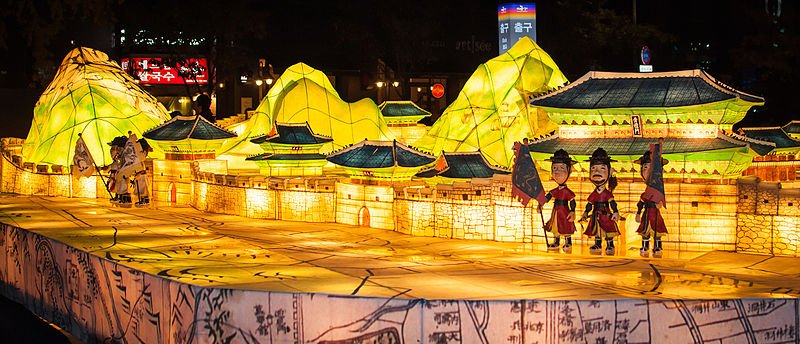
Image Credit: Jordi Sanchez Teruel https://www.flickr.com/photos/sunxez/8249449955/
December is a festive season in Korea, just like in many other places around the world. Shops and streets are decorated with beautiful Christmas lights and filled with people who want to enjoy the holiday spirit. Christmas is a national holiday in Korea, so people enjoy a day off and often get together with their loved ones, friends, and family to celebrate. You can share these holiday vibes saying ‘즐거운 크리스마스 되세요’ or ‘메리 크리스마스.’ Koreans also visit festivals of light, such as the Seoul Lantern Festival, which you can visit virtually here: https://www.stolantern.com/index.asp.
Likewise, year-end parties, 송년회 (a gathering to bid farewell to the current year), are held later in December with family, friends, and colleagues to conclude one year and get ready for the next. College students celebrate the end of the year in their academic departments, college clubs, and at parties for alum. Working people also get together at their companies and with community groups and hobby clubs.
Year-end parties used to be focused on eating and drinking, but these days, they are often held over a lunch hour and may involve watching movies or concerts together.
This time of year has become an opportunity to spend time with those around us!
할 수 있어요! I Got This!
Check to see if you can do the following:
- Propose and organize gatherings and plan details.
- Express one’s intention and guess for near future using (으)ㄹ테니까.
| Listening Script | |
|
|
|
|
알렉사:
|
안녕하세요? 오늘 미팅에서는 송년회에 대해 이야기해 보겠습니다. 먼저, 송년회를 언제 하면 좋을까요? |
| 웨이: | 크리스마스 후에는 회원들이 많이 바쁠 테니까 우리 송년회는 12월 둘째 주에 하는 게 좋겠습니다. 토요일 저녁이 어떨까요? |
| 예은: | 저도 토요일 저녁이 좋겠습니다. 6시 어떠세요? |
| 알렉스: | 네, 좋습니다. 그럼 12월 13일 토요일 저녁 6시로 하겠습니다. 모임 장소는 어디가 좋을까요? |
| 웨이: | 신촌 고기 뷔페식당에서 모이는 건 어떨까요? |
| 알렉사: | 네, 좋습니다. 그럼 신촌 고기 뷔페 집에서 하기로 합시다. 웨이 님이 예약 좀 해 주시겠어요? |
| 웨이: | 네, 제가 예약하겠습니다. 그런데 몇 명으로 해야 되죠? |
| 알렉사: | 우리 회원들이 모두 23명이니까 23명으로 예약하면 될 거예요. |
| 웨이: | 네, 알겠습니다. |
| 알렉사: | 그럼 회비는 어떻게 하면 좋겠습니까? |
| 웨이: | 2 차로 노래방도 갈 테니까 이만 오천 원씩 받으면 될 것 같습니다. |
| 예은: | 노래방은 저번에 갔으니까 커피숍에서 그냥 차 마시면서 얘기하는 건 어때요? |
| 웨이: | 좋아요. 그럼 회비는 이만 원씩만 걷으면 될 것 같아요. |
| 알렉사: | 좋습니다. 그럼 저녁 식사 회비는 이만 원으로 합시다. |
| 예은: | 네, 그게 좋겠습니다. |
| 엘렉사: | 그럼, 저는 회원들에게서 회비를 걷을 테니까 식당 예약은 웨이 님이 해 주시겠어요? 회원들에게 초대 이메일은 예은 님이 해 주시고요. |
| 웨이: | 네, 그러겠습니다. 회식이 기대되네요! |
| 예은: | 네, 알겠습니다. |
| 알렉사: | 고맙습니다. 그럼 오늘 모임은 이것으로 마치겠습니다. 감사합니다. |