Main Body
4 Lesson 14: 여기 즉석 떡볶이 있지요?
학습 목표 Goals
By the end of this lesson, you will be able to:
- Ask to seek confirmation about opinions and ideas.
- Express your feelings and opinions about food.
- Order Korean food at a restaurant.
들어가기 Setting Up
Lesson Focus
- INGREDIENTS – 단어 Vocabulary
- 한국 음식 Korean food
- 르 irregular verbs and adjectives
- At the restaurant
- RECIPE – 문법과 표현 Grammar
- A/V–지요?
- A/V–네요
- 르–irregulars
- LET’S COOK – 해봐요! Classroom Tasks
- 듣기 Listening
- 읽기 Reading
- 말하기 Speaking
- KOREAN FLAVORS – 한국어와 한국 문화 Korean Language and Culture
- Language point: Food suffixes
- Culture: Got kimchi?
- I GOT THIS! – 할 수 있어요!
- Check to see if you can do the following
- Listening Script
- NOW YOU TRY! – 스스로 해봐요! Async. Practices and Tasks
짝하고 얘기해 봐요! Share your thoughts!
Talk with your classmates about your experiences visiting Korean restaurants. Are they much different from or similar to American restaurants or other ethnic restaurants?
What seems to be happening in the following dialogue?
|
|
 |
|
|
|

In this lesson, you will learn how to place an order and share your opinions about foods using “–지요?” and “–네요.”
한국 음식 Korean Food
 |
 |
 |
 |
 |
 |
| 군만두 | 김치찌개 | 된장국 | 반찬 | 밥 | 즉석 떡볶이 |
| fried dumplings | kimchi stew | soy bean paste soup | side dishes | rice | on-the-spot stir-fried rice cake |
르 Irregular verbs and adjectives
 |
 |
 |
 |
 |
 |
| 마르다(말라요), 목마르다 | 모르다 (몰라요) | (노래를) 부르다 (불러요) | 다르다 (달라요) | 배부르다 (배불러요) | 빠르다 (빨라요) |
| to dry up, to be thirsty | to not know | to sing a song | to be different | to be full | to be fast |
식당에서 At the restaurant
| 어서 오세요. | Welcome! (Come on in!) | 맛있게 드세요. | Enjoy your meal. |
| 몇 분이세요? | How many in your party? | 반찬 좀 더 주세요. | Please give me more side dishes. |
| 여기 앉으세요. | Please take a seat here. | 여기요! | Over here, please! |
| 주문하시겠어요? | Would you like to order? | 잘 먹겠습니다. | Thank you for the food (I will eat well.) |
| 순두부 나왔습니다. | Here is your sundubu. | 잘 먹었습니다. | Thank you for the food (I ate well.) |
| 알겠습니다. | I understand. |
새 단어와 표현 New Vocabulary and Expressions
| 냄새 | smell | 뜨겁다 | to be hot (temperature) |
| 어묵 | oden, fish cake | 바삭바삭하다 | to be crispy |
| 이상 | and more than | 유명하다 | to be famous |
| 치즈 | cheese | 이상하다 | to be strange, wierd |
| –인분 | (person’s) portion | 차갑다 | to be cold (temperature) |
| 주문하다 | to order | 더 | more |
단어 메모지 Vocabulary Notes
1. –인분 serving
인(person)분(part, portion) means serving/portion and is used with Sino-Korean numbers to denote food for that number of persons. It is frequently used with the following food items. Some food items are not sold for one person, so you need to order at least two portions.
| 떡볶이 일 인분 주세요. | Please give me one serving of tteokbokki (stir-fried rice cake). |
| 불고기 이 인분 | two servings/two people’s worth of bulgogi |
| 삼겹살 삼 인분 | three servings of samgyeopsal (pork belly) |
When you order food at a restaurant, use this expression as shown here:
| 떡볶이 일 인분 주세요. | Please give me one serving of tteokbokki (stir-fried rice cake). |
2. 차갑다 vs. 춥다 cold
As we briefly talked about in Lesson 13, the two temperature words, 차갑다 and 뜨겁다, are only used for describing the temperature of physical objects. For describing the weather or one’s overall sensation (of feeling cold, for example), 덥다 and 춥다 are used.
| 한국 사람들은 더운 날씨에 뜨거운 음식을 먹어요. | Korean people eat hot foods in hot weather. |
3. 잘 먹겠습니다. and 잘 먹었습니다. Thank you for the meal.
Before eating, Korean people express their gratitude by saying 잘 먹겠습니다! which literally means “I will eat well/deliciously.” After they finish their meal, they show thanks for the meal by saying 잘 먹었습니다! (Literally, “I ate well/deliciously”).
발음 가이드 Pronunciation Guide
Pronouncing –네요
Here is a word of caution about the pronunciation of the ending –네: Remember the strong nose rule? Consonants like ㅂ, ㄱ, ㄷ (ㅅ, and ㅆ) become nasal (ㅁ, ㅇ, ㄴ, respectively) when there is a nasal sound that follows them. Practice saying these phrases aloud, CORRECTLY!
| 잘 먹네요 [잘멍네요] | 한국말 [항궁말] |
| 안 왔네 [아놘네] | 안 맵네요 [안 맴네요] |
단어 연습 Vocabulary Exercises
연습 1. New Vocabulary and Expressions
Describe each food item using adjectives as shown below.
(맛보기) 순두부찌개가 어때요? ⇒ 순두부찌개는 맵고 뜨거워요.
1. 밥
2. 된장찌개
3. 즉석 떡볶이
4. 군만두
5. 된장국
6. 야채 반찬
7. 치즈
8. Your own
Helpful Vocabulary:
| 달다 | 짜다 | 시다 | 맵다 | 시원하다 | 차갑다 |
| 뜨겁다 | 바삭바삭하다 | 맛있다/맛없다 | 맛이 이상하다 | 냄새가 좋다/나쁘다 |
연습 2. New Vocabulary and Expressions
Step 1. Go to a Korean restaurant and try the dishes in the vocabulary list with some friends. Then come back and check off the foods you have tried. Organize them into spicy and not spicy and dishes that you like and dishes that you don’t like.
Step 2. Using all the food terms you know and the names of Korean dishes and beverage options, create a new menu for a new Korean restaurant.
연습 3. New Vocabulary and Expressions
연습 4. New Vocabulary and Expressions
Choose the appropriate expression from the box below and complete the dialogue. Then, do a role play with your classmate.
| 여기요 | 어서 오세요 | 나왔습니다 | 잘 먹었습니다 |
| 일 인분 | 여기 앉으세요 | 주문하시겠어요 |

가: _________________! 몇 분이세요?
나: 한 사람이에요.
가: 그럼 _________________.
나: 감사합니다.
가: 메뉴 여기 있어요. _________________?
나: 불고기 _________________주세요.
가: 여기 불고기 _________________.
나: 감사합니다. 잘 먹겠습니다!
나: (a few minutes later) _________________! 반찬 좀 더 주세요.
가: 네, 알겠습니다.
나: 정말 _________________. 아주 맛있었어요.
가: 감사합니다.
1. A/V–지요

1. A/V–지요 right? isn’t it? surely
–지 is a sentence ending that indicates that the speaker presumes the listener has knowledge about what is being talked about. When used in a question, it makes the sentence very much like an English tag question, such as adding “isn’t it?” or “don’t you?”. It is used often for emphasis more than for seeking confirmation (like tag questions with falling intonation in English). It comes after the verb or adjective stem, and can be used with -요 for politeness.
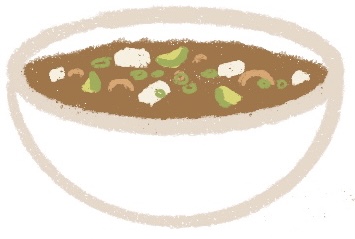
| 가: 여기 즉석 떡볶이 있지요? | This place has on-the-spot tteokboki (stir-fried rice cake), right? (You should know) |
| 나: 네, 있어요. 아주 맛있어요. | Yes, it does. It’s very delicious. |
| 가: 점심에 한식 먹을 거지요? [먹을 꺼지요] | We will be eating Korean food for lunch, right? |
| 나: 네, 한식 먹을 거예요. | Yes, we will. |
In statements, the ending –지 has a stronger implication that the information should be obvious to the listener. Be careful not to use –지 too much in statements or you will sound like a know-it-all:
| 떡볶이는 맵지요. | Teokbokki is spicy, of course. |
| Tense | Dictionary Form | Conjugation Rule | Final Form | Examples |
| Present | 좋다 | Add 지요 | 좋지요? | 오늘 날씨가 참 좋지요? The weather is nice today, isn’t it? |
| 마시다 | 마시지요? | 커피를 마시지요? You drink coffee, right? |
||
| Noun+이다 | 반찬이지요? | 이거 반찬이지요? This is a side dish, right? |
||
| Past | 좋다 | Past tense morpheme +지요 | 좋았지요? | 어제 날씨가 좋았지요? The weather was nice yesterday, wasn’t it? |
| 마시다 | 마셨지요? | 오늘 커피 마셨지요? You drank coffee today, didn’t you? |
||
| Noun+이다 | 식당이었지요? | 여기 한국 식당이었지요? This place was a Korean restaurant, right? |
2. Conjugation Practice
Complete the following chart with the appropriate –지요 form.
| Dictionary Form | –지요 | Dictionary Form | –지요 |
| 타다 | 타지요 | 먹다 | 먹지요 |
| 주다 | 연습하다 | ||
| 걷다 | 마시다 | ||
| 쓰다 | 만들다 | ||
| 맵다 | 부르다 |
<Answer Key> 주지요, 연습하지요, 걷지요, 마시지요, 쓰지요, 만들지요, 맵지요, 부르지요
연습 1. –지요
| 먹다 | 가다 | 이다 | 알다 | 있다 | 뜨겁다 | 듣다 |
연습 2. –지요
Change the following statements into questions confirming the information. Then, ask your partner a question as shown in the example.
(맛보기) 오늘은 목요일이에요.
(맛보기) ⇒ 가: 오늘은 목요일이지요?
(맛보기) ⇒ 나: 네, 목요일이에요./아니요, 목요일이 아니에요.
1. 오늘 날씨가 추워요. ⇒
2. 김치가 셔요. ⇒
3. 된장찌개가 맵고 짜요. ⇒
4. 이 치즈 냄새가 이상해요. ⇒
5. 떡볶이하고 즉석떡볶이가 달라요. ⇒
6. 고양이가 예뻐요. ⇒
7. 영화가 무서워요. ⇒
8. Your own
연습 3. –지요
Confirm what you (think you) know by converting the following to –지요 questions. Ask the questions to classmates who probably know the answers. When answering, use –지요 to convey that the answer is obvious.
(맛보기) 한국 음식
(맛보기) ⇒ 가: 한국 음식은 좀 맵지요?
(맛보기) ⇒ 나: 네, 좀 매워요. 그런데 안 매운 음식도 있어요.
1. 한국 음식
2. 영화
3. 수업
4. 주말
5. 배우/가수
6. 노래
7. 유명인 (celebrity)
8. Your partner
2. –네요

1. –네요 ending for slight surprises
In English, different moods are often conveyed by varying intonations. In Korean, sentence endings are used for expressing the speaker’s moods or attitudes. One ending you already know is the presumed knowledge suffix –지. –네 is another such ending; it expresses the speaker’s emotional status, namely a spontaneous (and short-lasting) reaction to something unexpected. (You can use an appropriate punctuation mark at the end of the sentence depending on the degree of emotionality intended.)
| 어, 오늘 날씨가 춥네요! | (I didn’t realize) it is cold today! |
| 밥이 좀 많네! | Wow, there is a lot of rice! |
| 한국음식을 잘 먹네요. | You can really eat Korean food (e.g., unlike my other foreign friends). |
| 김치가 별로 안 맵네요. | 김치 isn’t all that spicy (unlike its fame). |
| 그 사람이 아직도 안 왔네. | He is still not here yet. (How strange.) |
| Although this sentence is in the “past tense”, the situation described here is spontaneous & current: He has not come yet (and not He did not come yet.) |
| 친구가 벌써 집에 갔네요! | Oh, my friend already went home. |
| 라면을 많이 샀네요! | Oh (good); you bought a lot of ramen. |
| 와, 김치 만들었네요! | You made kimchi! |
ㄹ-verbs drop their “ㄹ” before this ending.
| 한국어를 많이 아네요! | You surely know a lot of Korean! |
| 이 반찬은 아주 다네요. | This side dish is very sweet. |
You will be given a summary of this notorious conflict between ㄹ and ㄴ in Korean at the end of the chapter.
2. Conjugation Practice
Complete the following table with the appropriate –네요 form.
| Dictionary Form | –네요 | Dictionary Form | –네요 |
| 타다 | 타네요 | 먹다 | 먹네요 |
| 주다 | 연습하다 | ||
| 걷다 | 마시다 | ||
| 쓰다 | 달다 | ||
| 덥다 | 배부르다 |
<Answer key> 주네요, 연습하네요, 걷네요, 마시네요, 쓰네요, 다네요, 덥네요, 배부르네요
연습 1. –네요
연습 2. –네요
You and your roommate are sampling different food items at a local supermarket. Comment on what each food item is like. Take turns.
(맛보기) 가: 파스타 맛이 어때요?
(맛보기) 나: 참 맛있네요!
 |
 |
 |
 |
| Delicious! | Salty! | Crispy! | Sour! |
 |
 |
 |
 |
| Spicy! | Hot! | Cold! | Sweet! |
연습 3. –네요
You and a colleague are eating together, but the food is not quite right. Make a sentence pointing out (for your friend’s confirmation) that each food has the wrong taste or temperature using –네요. Your “colleague” should respond agreeing with the shared knowledge, expressing a slight unexpectedness.
(맛보기) 가: 레모네이드가 좀 시지요?
(맛보기) 나: 네, 조금 시네요.
1. 오징어 튀김1
2. 팥빙수
3. 떡볶이
4. 된장찌개
5. 커피
6. 군만두
7. 치즈
8. Your own!
1 튀김: deep fried food
3. 르–irregulars

1. 르–irregulars
About ninety-nine percent of the verbs and adjectives that end in 르 conjugate irregularly. Unlike other types of irregular verbs and adjectives, however, 르–irregulars change only before the –아/어 ending. Before –아/어 endings, 르 words drop the vowel 으 in the stem and add another ㄹ, so they end up with a double ㄹ (letter and pronunciation).
| 르-irregulars | Meaning | Consonantal ending | –아/어 ending | –으 ending |
| 부르다 | call out; sing; be full | 부르기 전에 | 불러요 | 부르러 |
| 모르다 | not know | 모르지만 | 몰랐어요 | 모를 거에요 |
| 빠르다 | to be fast | 빠르지요 | 빨라요 | 빠를 거예요 |
| 마르다 | to be dry | 마르네요 | 말라서 | 마를 거예요 |
| 다르다 | to be different | 다르고 | 달랐어요 | 다를 거예요 |
| 우리 누나는 노래를 잘 불러요. | My older sister sings well. |
| 목이 말라요. 뭐 마셔요. | I am thirsty. Let’s drink something |
2. Conjugation Practice
Complete the following table with the appropriate 르–irregular form.
| 르 irregular | –아/어요 | –았/었어요 | –(으)ㄹ 거예요 | –아/어서 | –고 | –지요 | –네요 |
| 다르다 | 달라요 | 달랐어요 | 다를 거예요 | 달라서 | 다르고 | 다르지요 | 다르네요 |
| 마르다 | |||||||
| 모르다 | |||||||
| 부르다 | |||||||
| 빠르다 |
<Answer key> 말라요, 말랐어요, 마를 거예요, 말라서, 마르고, 마르지요, 마르네요, 몰라요, 몰랐어요, 모를 거예요, 몰라서, 모르고, 모르지요, 모르네요. 불러요, 불렀어요, 부를 거예요, 불러서, 부르고, 부르지요, 부르네요, 빨라요, 빨랐어요, 빠를 거예요, 빨라서, 빠르고, 빠르지요, 빠르네요
연습 1. 르–irregulars
| 다르다 | 마르다 | 모르다 | 부르다 | 빠르다 |
연습 2. 르–Irregulars
Interpretive Task 1. 듣기 Listening
Alexa and Bryan are at a Korean restaurant. Listen carefully and answer the following questions in Korean.
- What did Alexa and Bryan order? List everything.
- Why did Alexa come to this restaurant?
- What is Alexa’s favorite food?
- How do you get water in this restaurant?
Helpful Vocabulary
| 제일 좋아하는 | favorite |
Interpretive Task 2. 읽기 Reading
 |
신당동 즉석 떡볶이 집떡볶이 다들 좋아하시지요? 어제 신당동에서 유명한 “즉석 떡볶이 집”에 떡볶이 먹으러 갔어요. 군만두와 즉석떡볶이를 시켰어요. 떡볶이 양도 많고 어묵도 많이 줬네요! 떡볶이 국물이 좀 매웠지만 진짜 맛있었어요! 군만두도 기름이 많지 않고 뜨겁고 바삭바삭해요. 떡볶이하고 같이 먹으면 최고예요. 그리고 떡볶이에 라면하고 치즈도 넣을 수 있어요. 그런데 여기에서 즉석떡볶이는 2인분 이상 시켜야 돼요. 그렇지만 떡볶이가 별로 안 비싸서 괜찮아요. 2인분에 15,000원밖에 안 해요. 아, 서비스가 진짜 빨라요. 참, 그리고 물은 셀프예요! #신당동 # 즉석떡볶이 #어묵최고 #물은셀프 |
Bryan posted about the food he had today on his SNS site. Read his post and complete the summary chart in English.
| Restaurant Name | |
| Food he ordered | |
| What the food was like | |
| Price | |
| Service; water |
Interpersonal & Presentational Activity 3. 말하고 발표하기 Speaking
My Favorite Food
Talk about your favorite Korean dishes with your friends and take a memo. Present what you and your friends talked about.
| Suggested Questions | Person 1 | Person 2 |
| Why do you like the dish? | ||
| Describe the taste of your favorite dish. | ||
| How often do you eat it? | ||
| Can you cook the dish? | ||
| Is there any memorable experience related to your favorite food? | ||
| Does your favorite food remind you of any memories? | ||
| Ask your friends if they have ever had the dish you like. Find out why they like/dislike your favorite food. |
Language Point
Food Suffixes
When you go to a Korean restaurant, you will see recurrent parts of food names. Here are some tips that will make you Korean-cuisine savvy!
- 볶음, 볶기, 볶이 lightly stir-fried dish (오징어볶음, 멸치볶음, 감자볶음, 떡볶이)
- 찌개 salty stew (김치찌개, 된장찌개)
- –탕 soup based on meat broth (갈비탕, 설렁탕)
- –구이 broiled meat or fish (생선구이, 소금구이)
- –면 noodles (냉면, 라면, 짜장면)
- –전 thin, savory Korean pancakes (파전, 해물파전, 생선전)
- –밥 rice-based dish (비빔밥, 볶음밥)
- 불– broiled or barbequed over open fire (불고기, 불갈비)
한국 문화
Got Kimchi?

Photo Credit: Pixabay
One bowl of rice and a dish of 김치 can make a complete meal to most Korean folks. Although 김치 is famous for its red-hot spice, it used to be made white in Korea. Red pepper was introduced into Korea in the 1600’s and was not used as a main ingredient in 김치 until the 18th century! According to one of the many 김치 research institutes in Korea, there are almost 200 different kinds of 김치, which Koreans enjoy daily, including 25 different kinds of Napa cabbage-김치, 62 radish-김치, ten cucumber-김치, five seafood-based 김치, and 54 other kinds of 김치 made with various vegetables.
Each province has its own special 김치 recipes. 경상도 김치 is famous for its use of anchovy extract, 전라도’s delicious 김치 uses a bounty of salted seafood, 충청도 김치 has a clean and refreshing aftertaste, and in North Korea, (e.g. 평안도, 함경도) red pepper or garlic is used sparingly. Here are some of the names you can cite when you have an intellectual 김치 conversation: 배추 김치, 총각 김치, 깍뚜기, 동치미, 나박 김치, 오이 소배기. Ask a friend or search the web for 여러가지 김치 (different kinds of 김치) to learn more about 김치!
NOTE: Although the side dish 김치 is well-known for its spice, there are also plenty of spicy Korean main dishes. In general, anything red is spicy. Korean spice is usually based on 고추장 or 고춧가루, and it tends to last longer than Japanese wasabi. If you are up for spicy Korean dishes, try these!
떡볶이, 육개장, 매운탕, 김치찌개, and 비빔밥 (though for the last, some restaurants let you decide on the amount of 고추장 you use).
할 수 있어요! I got this!
1rCheck to see if you can do the following.
- I can seek confirmation about my opinions and ideas.
- I can express my feelings and opinions about food.
- I can order Korean food at a restaurant.
| Listening Script
종업원: 어서 오세요! 몇 분이세요? 브라이언: 두 명이요. 종업원: 여기 앉으세요. 주문하시겠어요? 알렉사: 즉석 떡볶이 2인분 주세요. 어묵도 많이 주세요. 종업원: 네, 알겠습니다. 브라이언: 어, 그리고 군만두도 하나 시킬래요? 알렉사: 좋아요. 브라이언: 군만두도 하나요. 종업원: 네, 즉석 떡볶이 이 인분, 군만두 일 인분이요. 알겠습니다. 브라이언: 알렉사 씨, 이 식당 어떻게 알아요? 유명해요? 알렉사: 네, 여기 즉석 떡볶이가 참 유명해요. 그래서 브라이언 씨하고 한번 오고 싶었어요. 브라이언: 아, 그래요? 종업원: 여기 즉석 떡볶이 이 인분, 군만두 일 인분 나왔습니다. 맛있게 드세요. 알렉사: 와, 냄새 너무 좋지요? 브라이언: 음, 냄새 좋네요! 어디. 좀 맵지만 진짜 맛있네요. 브라이언: 알렉사 씨 어묵 좋아하죠? 여기 더 먹어요. 알렉사: 고마워요. 저는 어묵을 제일 좋아해요! 브라이언 씨도 만두 하나 더 먹어요. 브라이언: 네, 고마워요. 아… 맵네요. 여기요! 물 좀 주실래요? 종업원: 죄송하지만 물은 셀프예요. 브라이언: 아… 몰랐네요. 제가 물 가져올게요. (물 떠온다) 브라이언: 알렉사 씨, 물 여기요~ 알렉사: 고마워요. 아, 진짜 많이 먹었네요. 즉석 떡볶이 맛있죠? 브라이언: 네, 보통 떡볶이랑 진짜 좀 다르네요. 맛있게 잘 먹었어요. 아, 배부르다. |