Main Body
6 Lesson 17 Communicative Tasks
Lesson 17
By the end of this lesson, you’ll be able to:
- Interpretive communication: Understand key information about housewarming gifts.
- Interpersonal communication: Discuss the advantages and disadvantages of different housewarming gifts and collaboratively make a decision.
- Presentational communication: Create a video showcasing housewarming gifts from your culture.
- Intercultural communication: Understand the significance of sharing rice cake in South Korea.
Task 1. 집들이 선물
Watch the video (10:54–16:35) in which Kwangkyu’s friends visit his house and give him housewarming gifts. Answer the following questions in Korean.
Part 1: 영상에 대해서 답해1 주세요.
1. 광규가 받은 선물에 동그라미 치세요2 (Hint: 8개).
| 기프트 카드 | 휴지 | 안경 | 비누 | 폼롤러 |
| 요가매트 | 세제 | 수건 | 효자손 | 화분 |
| 인테리어 용품 | 단백질 음식 | 비타민 | 상품권 | 오로라 무드등 |
2. 광규가 좋아한 선물은 뭐예요?
2. ___________________________________________________________________
3. 광규는 왜 진주의 선물을 안 좋아해요?
2. ___________________________________________________________________
4. 광규는 마음에 드는 선물을 준 동생들한테 뭘 줬어요?
2. ___________________________________________________________________
Part 2: 여러분의 선물 취향은 어때요?
5. 광규가 받은 선물 중에서 어느 선물을 제일 선호해요? 왜요?
2. ___________________________________________________________________
6. 어떤 집들이 선물을 받아 봤어요? 어땠어요?
2. ___________________________________________________________________
7. 광규한테 어떤 집들이 선물을 주고 싶어요? 왜요?
2. ___________________________________________________________________
Helpful Vocabulary:
| 합격 | pass | 귀신 | ghost |
1답하다 to answer
2동그라미 치다 to circle
CULTURE NOTE: 이사 떡 (시루떡) |
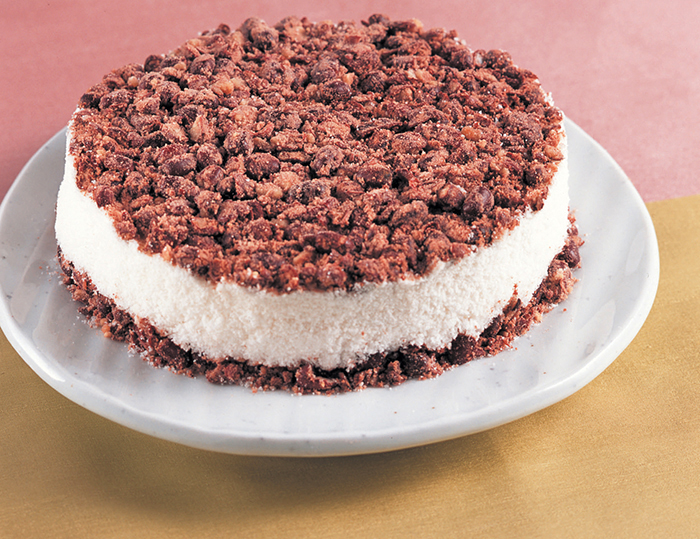 In Korea, it is a common tradition to share tteok (rice cakes) with neighbors when you move into a new home. Traditionally, sirutteok made with red beans is shared, as red beans are believed to repel bad luck. However, in today’s society, where interactions with neighbors have become less common, the tradition of giving housewarming rice cakes has become less practiced. (Source)
Task 2. 집들이 선물 고르기
Meet with your partner(s) and video-record your best performance. Two friends are selecting a housewarming gift for your friend. Discuss the pros and cons of the provided options and make a choice.
1. Guided Conversation Practice
첸 and 아키라 are discussing a housewarming gift for their friend, 준호. 첸 wants to buy toilet paper, and 아키라 wants to buy a set of pots and pans.
아키라: 우리 준호네 집에서 집들이 할 때 어떤 선물을 사 가면 좋을까?
준호: 휴지 어때?
아키라: 그것도 괜찮은데, 선물을 하기에는 조금 싼 편이지 않아?
준호: ________________________________________________________________.
준호: [Acknowledge 아키라’s point and provide a reason for buying toilet paper using
준호: A/V–(으)면 A/V–(으)ㄹ수록]
아키라: 그렇구나. 아니면 냄비 세트는 어때? 혼자 살 때 냄비가 필요하잖아.
준호: ________________________________________________________________.
아키라: 냄비 세트는 보통 10만원 정도 하는 거 같아.
준호: ________________________________________________________________.
아키라: 맞아, 조금 비싸긴 한데 실용적이더라고.
준호: ________________________________________________________________.
아키라: 그럼, 어떻게 할까?
준호: ________________________________________________________________.
아키라: 좋아! 그럼 ____________(으)로 하자. 내가 온라인으로 살게.
2. Create Your Own Dialogue with a Classmate
You and your partner are choosing a housewarming gift for your Korean language teacher. Discuss the pros and cons of each option and come to an agreement on the best gift. Adhere to the following guidelines:
- Each person should speak at least four meaningful sentences.
- Use the following grammar forms at least once: A/V–던, A/V–(으)면 A/V–(으)ㄹ수록, and A/V–더라(고)
- Use the familiar speech style.
Task 3. 미국 집들이 선물 추천하기
Create a video suggesting 2 to 3 housewarming gift ideas for people unfamiliar with American culture (or your own culture). Explain the pros, cons, and cultural significance of each gift. Adhere to the following guidelines:
- Include at least seven meaningful sentences.
- Use the following grammar forms at least once: A/V–던, A/V–(으)면 A/V–(으)ㄹ수록, and A/V–더라(고)
- Use the formal and informal polite speech styles.
(맛보기)
안녕하세요, 여러분! 오늘은 미국 친구 집들이에 가져가면 좋을 선물들을 소개하려고 합니다.
첫째1, __________인데요! . . .
둘째2는 __________입니다. . .
마지막으로3 __________를 추천합니다! . . .
오늘 영상이 여러분에게 도움이 되셨기를 바랍니다! 즐거운 집들이 되세요!
1첫째 first
2둘째 second
3마지막으로 lastly